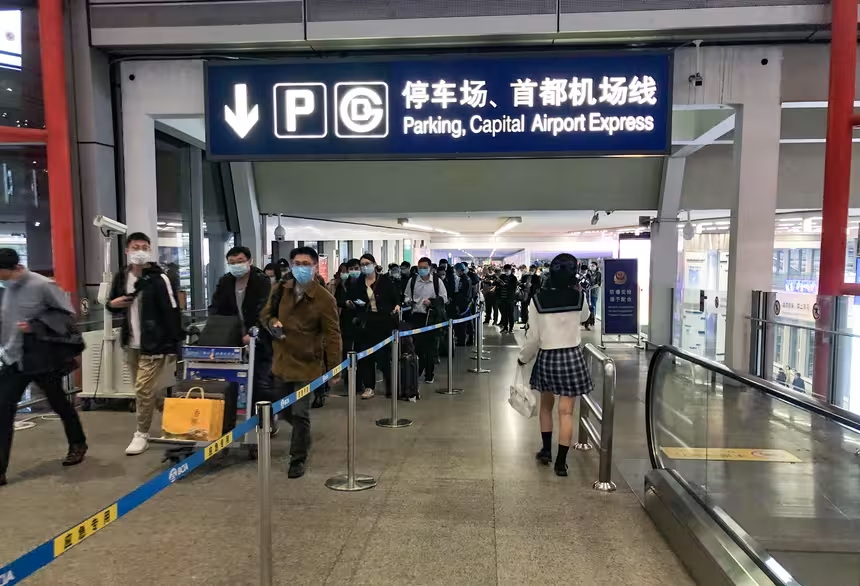
Ten days in China without a visa sounds like a straightforward invitation, but the legal mechanism is visa-free transit, not a general tourist stay. Czech citizens are among the eligible nationalities, yet the journey must continue from mainland China to a third country or region. The word “third” is decisive: Prague–Beijing–Prague does not qualify, while Prague–Beijing–Tokyo or Prague–Beijing–Hong Kong may qualify if all other conditions are met.
The traveller needs a valid international travel document—under the published rules, generally with at least three months’ validity—and confirmed onward transport leaving within the permitted period. Border officers may ask to see the next flight or train booking, accommodation and a credible itinerary. Meeting the listed requirements does not create an unconditional right of entry; the final decision belongs to Chinese immigration authorities.
The period is not calculated simply by adding 240 hours to the landing time. Official guidance states that it begins at 00:00 on the day after entry. This can provide part of an additional day, but a ticket should never be planned for the final possible minute. A delay, rebooking or misunderstood time limit can turn an administrative advantage into a serious problem. Leave a comfortable margin before the authorised stay expires.
The scheme also applies only at designated entry points and within authorised areas. Beijing is an eligible gateway, but the exact permitted region must be verified against the latest immigration table. Ten days do not automatically authorise travel anywhere in China, and domestic movements must remain compatible with the transit itinerary.
Hong Kong and Macao count as separate regions for immigration purposes, which can make a route eligible. The same fact causes a common mistake: a traveller who leaves mainland China for Hong Kong and then returns to Beijing is entering the mainland again and needs a valid basis for that second entry. A single transit permission is not a multiple-entry visa.
The airline may inspect the documents at check-in in Prague or at a connecting airport. Keep official rules available offline, but above all carry a clearly issued onward ticket showing the passenger’s name, date and destination. Separate one-way tickets can be valid, yet they are harder to explain and leave the traveller exposed if the first carrier is late and the second has no duty to rebook.
Visa-free transit does not permit employment. Paid work requires the appropriate visa and work authorisation. Accommodation registration still applies after arrival; a standard hotel normally completes it, while a private host must not ignore it. Travel insurance valid in China remains essential, because immigration convenience does not alter medical or financial risk.
The simplest rule is this: if China is the main destination and the traveller returns along the same route, obtain a tourist visa. If Beijing is a genuine stop on the way to another country or region, the 240-hour scheme can be extremely useful. In either case, check the Czech Ministry of Foreign Affairs, China’s National Immigration Administration and the airline again before departure. The rules change faster than printed guidebooks.