Beijing’s Central Axis: 7.8 kilometres that explain the capital
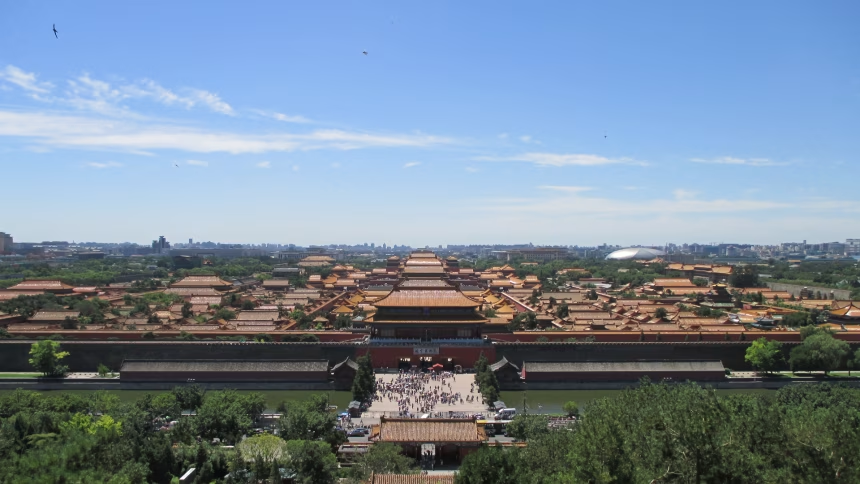
Beijing’s Central Axis is not a boulevard in the ordinary sense. It is a 7.8-kilometre sequence of gates, ceremonial spaces, palaces, gardens and…
Section
Beijing’s Central Axis is not a boulevard in the ordinary sense. It is a 7.8-kilometre sequence of gates, ceremonial spaces, palaces, gardens and…
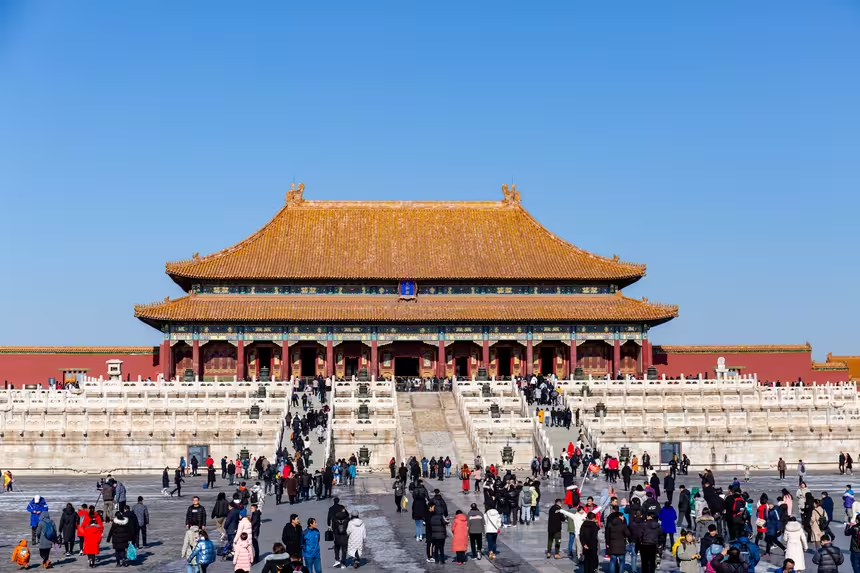
The Forbidden City is often described through superlatives—nearly a thousand surviving buildings, vast courtyards and the ceremonial heart of two…
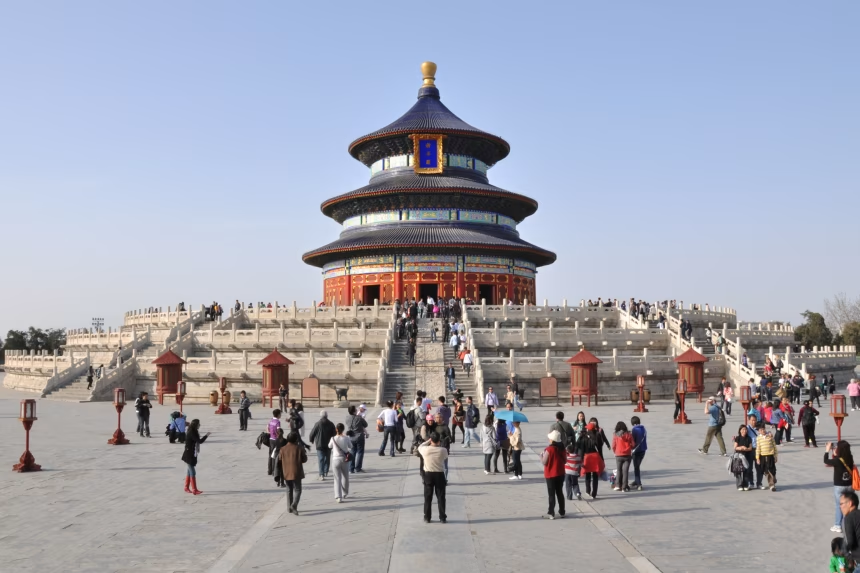
The Temple of Heaven was not built as a conventional temple for daily public worship. It was a state ritual landscape in which the emperor…
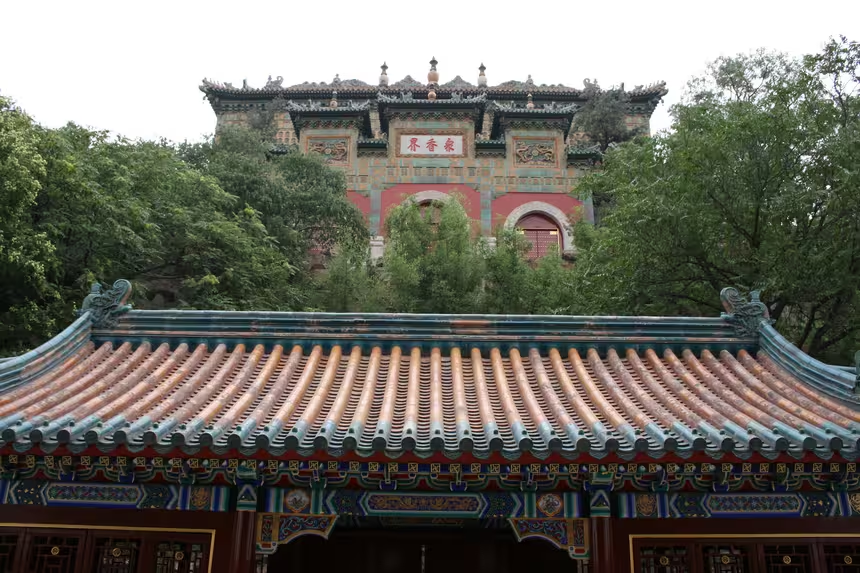
The Summer Palace is frequently introduced as an escape from Beijing’s summer heat. It was also an instrument of government, representation and…
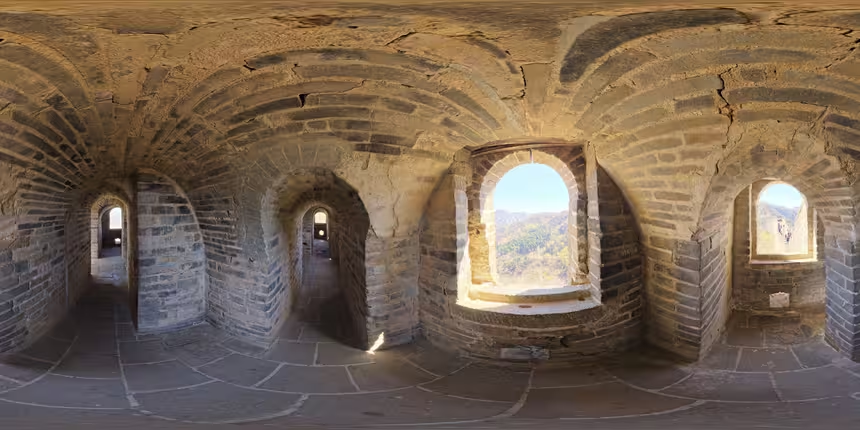
The Great Wall is not one continuous structure built by a single emperor and visible from the Moon. It is a vast family of walls, trenches, passes…
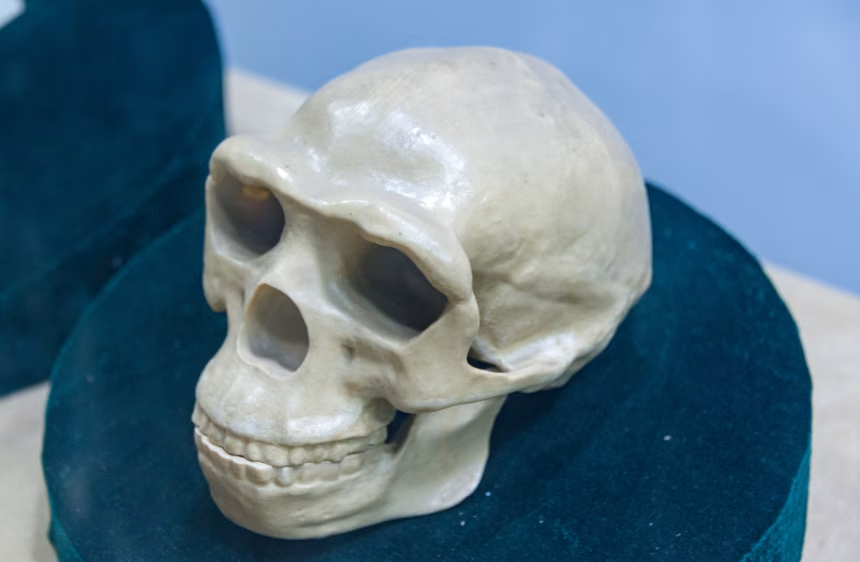
Zhoukoudian, southwest of central Beijing, changed the study of human evolution. Excavations in the 1920s and 1930s produced skulls, teeth, stone…
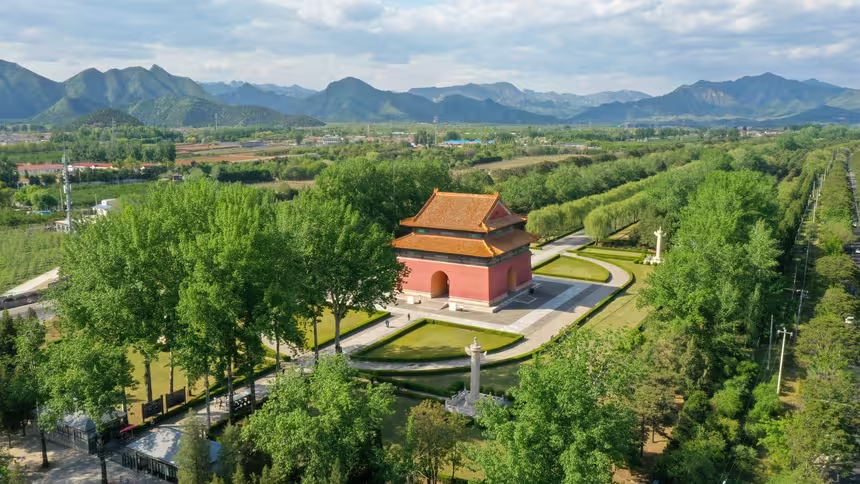
The Ming Tombs northwest of Beijing are not thirteen copies of one monument. They form a ritual landscape selected according to topography and…
The Grand Canal is often imagined as a single ancient trench between north and south. In reality it is a network assembled, redirected and repaired…
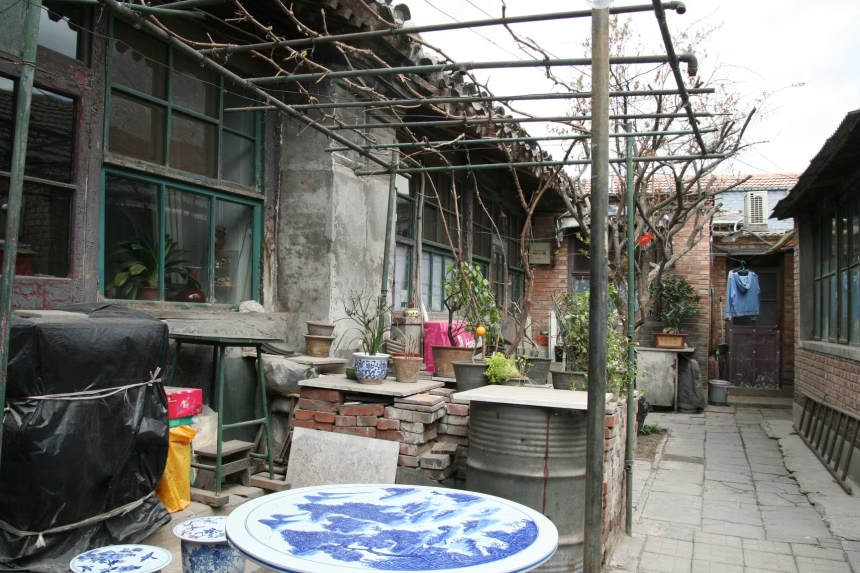
The word hutong describes the lane, not the courtyard house itself. It is generally linked to a Mongolian word for a well and became part of…
The Palace Museum opened in 1925, fourteen years after the fall of the Qing dynasty and one year after the former emperor Puyi was expelled from…
The Forbidden City can be read through its roofs. The colour of the tiles, the form of the ridge, the number of ornamental animals and the height…
The Temple of Heaven was created in the first half of the fifteenth century as an imperial ceremonial complex. Emperors of the Ming and Qing…
Bez předchozího písemného souhlasu redakce není dovoleno obsah tohoto webu přebírat, kopírovat, strojově vytěžovat ani dále zveřejňovat.
Obsah může být vytvořen s podporou AI a je redakčně doladěný člověkem. Za finální podobu odpovídá redakce.