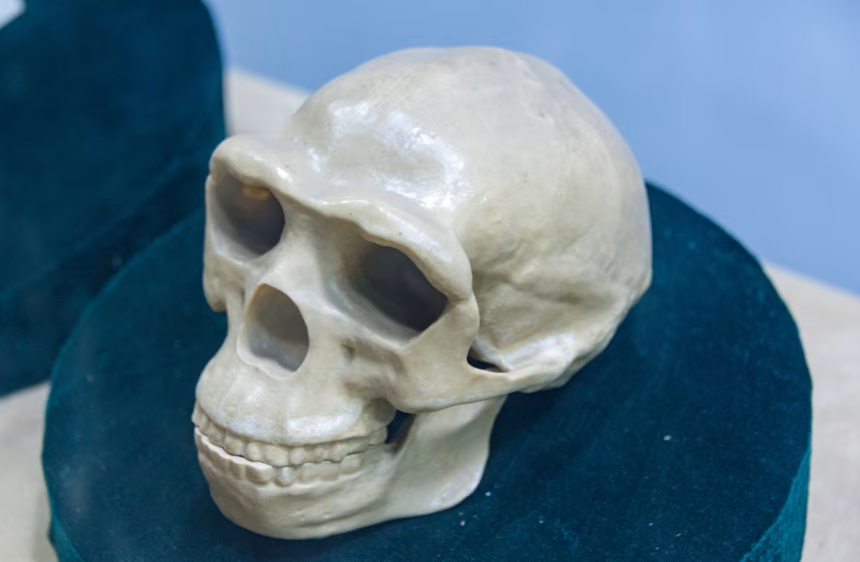
Zhoukoudian, southwest of central Beijing, changed the study of human evolution. Excavations in the 1920s and 1930s produced skulls, teeth, stone tools and animal remains assigned to Homo erectus and popularly known as Peking Man. The site demonstrated that ancient humans had lived in East Asia hundreds of thousands of years ago, although later research has repeatedly revised the dates and interpretation.
The discovery was international and politically complicated. Chinese scholars worked with researchers from several countries at a time when modern palaeoanthropology was taking shape. Early reconstructions reflected limited evidence and contemporary assumptions. Scientific importance does not make every old claim permanent; better dating, taphonomy and comparison continue to change the story.
The original human fossils disappeared in 1941 while being prepared for transport during the Japanese occupation and the Pacific War. Their fate remains unknown. Plaster casts, photographs, measurements and later finds preserve substantial information, but the loss prevents new non-destructive methods from being applied to the most famous specimens. It is both a scientific tragedy and a lesson in protecting collections during conflict.
Evidence for the controlled use of fire has generated a long debate. Burned material and spatial patterns once seemed decisive, then some researchers argued that natural processes could explain them. New excavation and microscopic analysis have strengthened parts of the human-use interpretation. The important point is methodological: a dramatic conclusion must be tested against how sediment and objects accumulated.
Zhoukoudian is not a single cave frozen at one moment. It contains multiple localities and long environmental sequences. Animal remains, pollen, tools and geology help reconstruct changing climate and behaviour. Modern methods can extract information from old sediments even without finding another complete skull.
As a World Heritage site close to a megacity, Zhoukoudian must balance research, conservation and public access. A good visit avoids the simple ladder of progress from “primitive” to modern human. Evolution branches, populations mix and evidence remains incomplete. The site’s enduring value lies precisely in showing science as a process of discovery, loss, correction and renewed questioning.