Beijing is considerably easier to visit independently than it was a few years ago, but it is still not a city where arriving unprepared is a good idea. Monument bookings, payments, transport and much of everyday communication have moved to the phone. The system is fast once it is set up, yet it relies on applications and habits that a foreign visitor may not know. The most important part of the trip therefore starts at home, with documents, connectivity and reservations.
The first question is the legal basis for entry. An ordinary tourist visit generally requires a visa unless the traveller meets the exact conditions of the 240-hour visa-free transit scheme. Transit is not a substitute for a tourist visa on any return trip: the traveller must continue to a third country or region and hold a confirmed onward ticket. Current conditions should be checked with Chinese authorities and the Czech Ministry of Foreign Affairs shortly before departure, not inferred from an old blog post.
Keep offline copies of the passport, visa or transit itinerary, travel insurance, the hotel address in Chinese characters and the contact details of the Czech embassy. Hotels normally complete the compulsory accommodation registration. When staying privately, confirm who will register the stay and how. An address written only in Latin script may be of little use to a driver, whereas a Chinese version can be shown even without mobile data.
In Beijing the phone is simultaneously a wallet, ticket, map and booking desk. Install Alipay or WeChat before travelling, link a supported international card and finish identity verification. International bank cards are accepted more widely than before, while small businesses often still prefer QR payment. Cash remains legal tender and is a sensible backup, although it is rarely the most convenient primary method.
The busiest attractions need separate preparation. The Forbidden City, major museums and some Great Wall sections use capacity limits, identity checks and timed reservations. The booking name must match the passport presented at the entrance. A free half-day is often more valuable than a schedule of four major sights: distances, security checks and crowds consume more time than a map suggests.
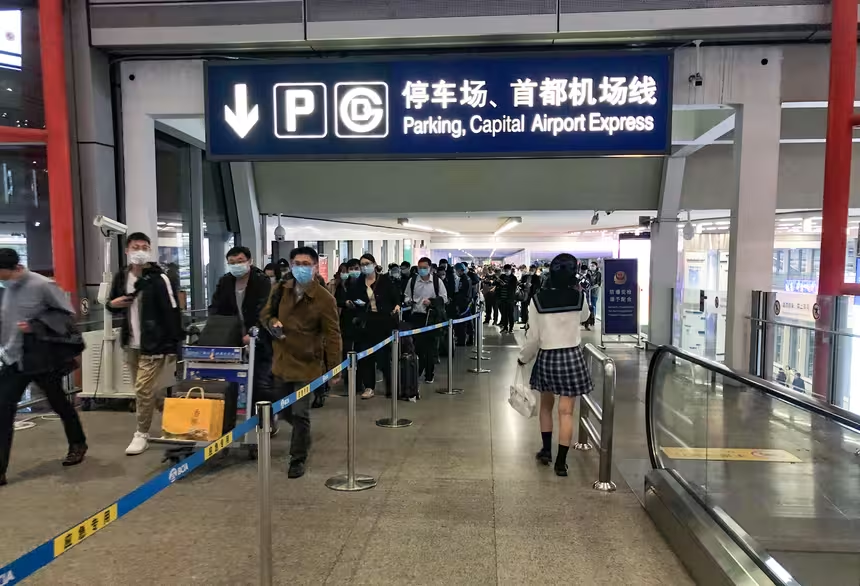
It also helps to distinguish the two airports. Capital Airport is northeast of the centre; Daxing is far to the south. Changing between them is not a minor transfer. The metro is reliable and stations are signed in English, although the final trip to a hotel can be easier by a licensed taxi or an established ride-hailing service. A train number, station and terminal are more useful than an approximate transliteration of a place name.
Internet services may work differently from those in the European Union. Check roaming, an eSIM or a local SIM in advance and do not leave every document in a single cloud service. An offline map, downloaded translation package and screenshots of reservations solve most practical problems without elaborate workarounds. Visitors must at the same time respect the local legal environment and expect some familiar international platforms to be unavailable.
Preparation does not have to make the journey rigid. Secure the entry documents, first night, payment options and the few capacity-limited visits; leave the rest flexible for weather and energy. The biggest adjustment is not the language but the degree to which city services are connected to digital identity. Once the itinerary accounts for that, Beijing becomes a remarkably legible metropolis rather than an impenetrable one.