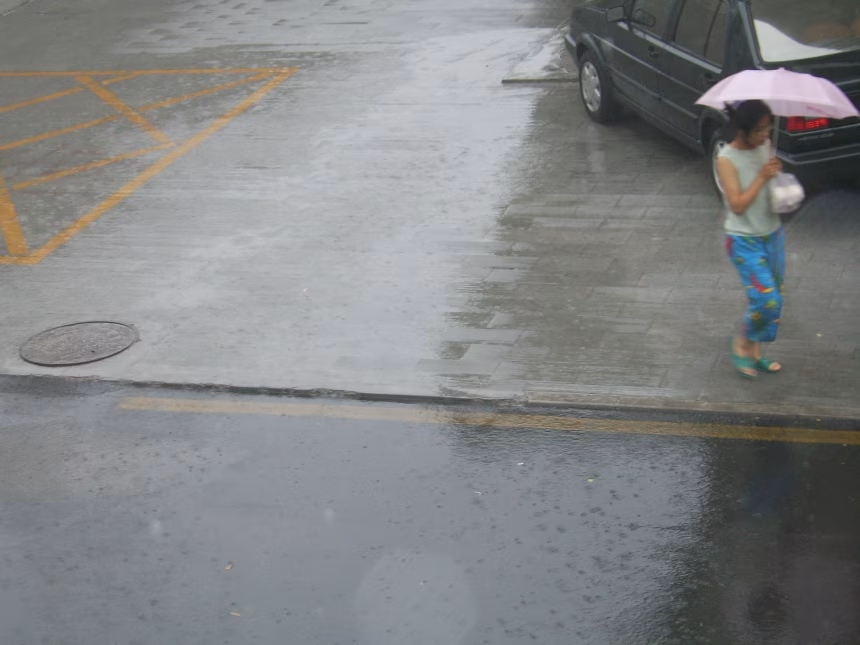
Beijing is often associated with a dry winter and cold winds, yet its summer risk takes the opposite form: high temperatures, humidity and intense rainfall concentrated into short events. Vast sealed surfaces, dense development and the contrast between the flat centre and mountainous outskirts amplify the consequences. For a visitor, a storm may cancel an excursion; for the city, it tests drainage, transport, warning systems and evacuation capacity at the same time.
The basic problem is not only the total amount of water but the speed at which it falls. Drainage designed for ordinary rain cannot cope when low underpasses, stations and underground spaces fill within a short period. Flash floods and landslides add a different hazard in mountain districts. The same rainfall figure therefore means one thing on a broad central avenue and another in a narrow valley on the way to a remote Great Wall section.
The term “sponge city” describes an attempt to retain, infiltrate, clean and later use water instead of sending it immediately into pipes. Permeable surfaces, green roofs, retention parks, wetlands and carefully planned levels are part of the method. These measures reduce pressure on drains during smaller events and improve the urban environment during ordinary days.
They cannot make every extreme disappear. Once soil is saturated or rainfall exceeds design capacity, water still needs a safe route. The useful question is therefore not whether a park can “stop a flood”, but which event it can manage, where excess water will go and what happens when the limit is exceeded. Infrastructure needs maintenance: a permeable surface clogged by sediment is only decorative paving.
Heat and water management are connected. Trees and planted areas provide shade and evaporative cooling, while open water and moist soil can lower local temperatures. The effect depends on species, available water and urban form. A tree with too little soil will not develop a useful crown; irrigating every lawn during drought can simply move the environmental burden elsewhere.
Warning systems are as important as construction. Forecasts must be translated into decisions about closing mountain sites, suspending transport, protecting underground spaces and informing people in several languages. A red alert that reaches a phone but does not change behaviour has limited value. Visitors should not treat a closure as excessive caution or attempt to bypass it for a photograph.
Extreme heat requires shaded routes, access to drinking water, adjusted working hours and protection for older people, children and outdoor workers. Air conditioning saves lives but increases electricity demand and can warm streets through waste heat. Better buildings, external shading and district-level planning reduce the need before mechanical cooling begins.
Beijing’s scale makes the consequences dramatic, but the underlying lesson applies to many cities. Climate adaptation is not a single type of special paving. It is a combination of blue-green infrastructure, maintenance, forecasting and clear responsibility. A retention park without an effective warning system cannot protect a mountain community; an application without a physical route for water cannot protect a street.
Much of adaptation is almost invisible on an ordinary day: shade over a queue, a drinking fountain, or a planted depression that looks like common greenery. Its value appears when a forecast becomes an extreme event. Beijing is therefore best read as a connected safety system, not only as a collection of spectacular projects.