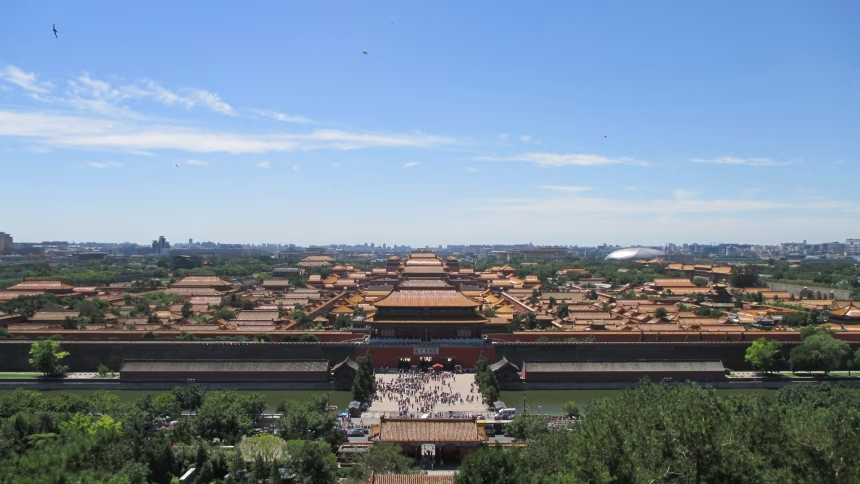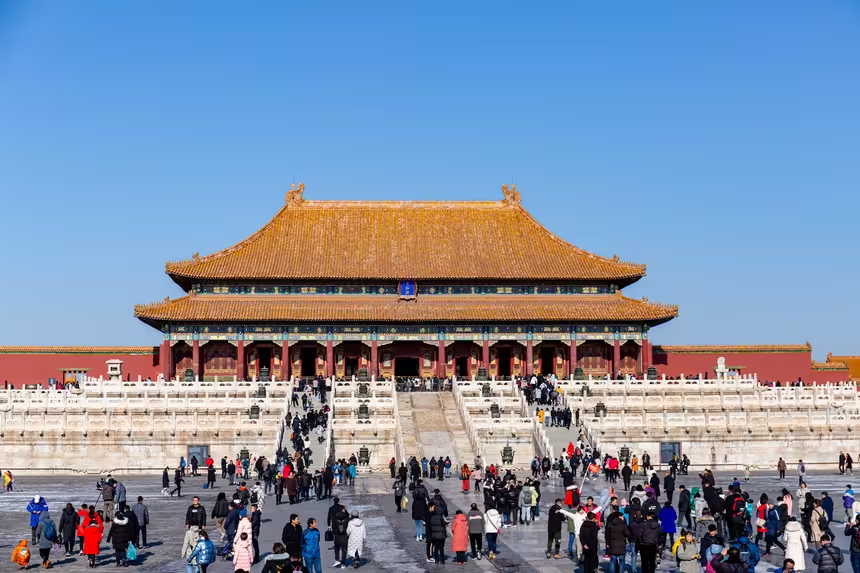
The Forbidden City is often described through superlatives—nearly a thousand surviving buildings, vast courtyards and the ceremonial heart of two dynasties. Its scale matters, but the palace becomes more intelligible when read as an operating system for the court. Walls, gates and changes of level determined who could go where, which bodies could be seen and how political authority appeared.
The southern Outer Court contained the great halls associated with state ceremony. Farther north, the Inner Court held residences, gardens and the more intimate administration of imperial life. The division was never absolute: government entered the household and household relationships shaped government. Spatial separation nevertheless created a powerful public image of ordered rule.
Colour and number reinforced hierarchy. Yellow roof tiles signalled imperial status; red walls, marble terraces and roof ornaments created a controlled visual vocabulary. Symbolic explanations should not be turned into a code in which every detail has one eternal meaning. Buildings were repaired, functions changed and practical concerns such as drainage, fire and climate remained decisive.
The palace was also a workplace. Officials, guards, artisans, eunuchs and servants maintained a population and material system far larger than the imperial family. Heating, water, food, documents and security moved through spaces that tourist narratives often present as empty ceremony. Understanding that labour prevents the architecture from becoming a fairy-tale backdrop.
Fire repeatedly threatened the timber complex, while political collapse, war and removal dispersed objects. After the fall of the Qing dynasty, the transformation into the Palace Museum turned a restricted seat of power into a public institution. That transition did not erase disputes about ownership, access and the location of collections; it created a new framework in which they could be studied.
Today the challenge is to protect fragile structures while receiving enormous visitor numbers. Capacity limits, rotating displays and conservation closures are part of the museum, not failures of hospitality. The Forbidden City is most revealing when visitors look beyond the central halls to the relationship between grand ceremonial space, small service routes and the human organisation that once made the palace function.