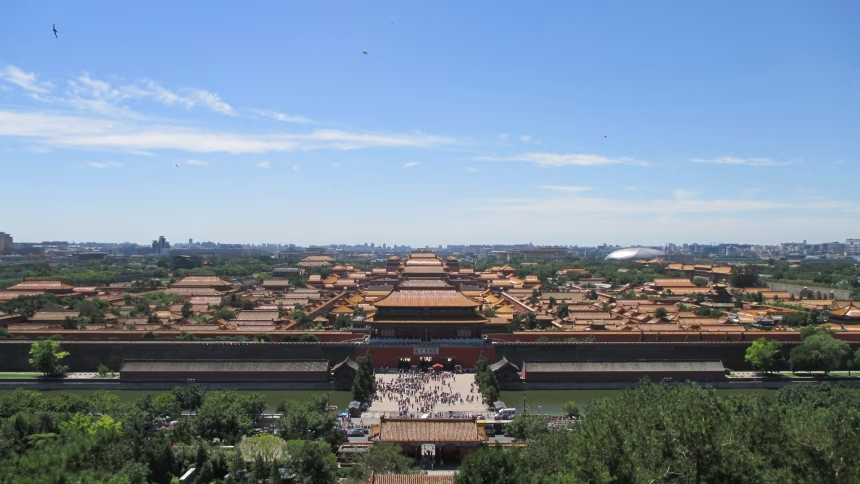
Beijing’s Central Axis is not a boulevard in the ordinary sense. It is a 7.8-kilometre sequence of gates, ceremonial spaces, palaces, gardens and civic buildings that organised the imperial capital and still structures the modern city. Its inscription on the UNESCO World Heritage List recognises an urban idea developed over centuries, rather than a single monument.
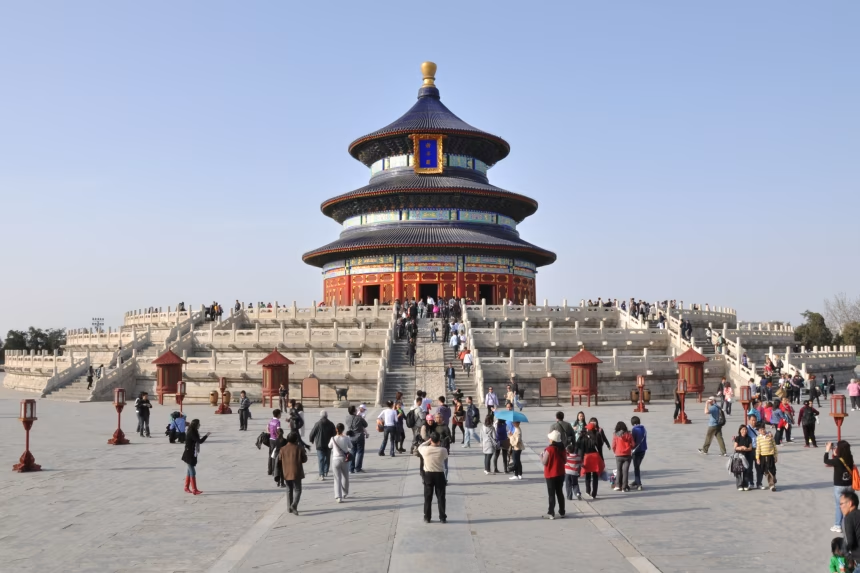
The axis runs from the Bell and Drum Towers in the north through the old city, Jingshan, the Forbidden City and Tian’anmen area to the ceremonial complexes and remains around Yongdingmen in the south. The sequence is not perfectly uniform. Dynasties rebuilt it, the republican and socialist periods altered its functions, and contemporary Beijing surrounds it with roads, infrastructure and new public space.
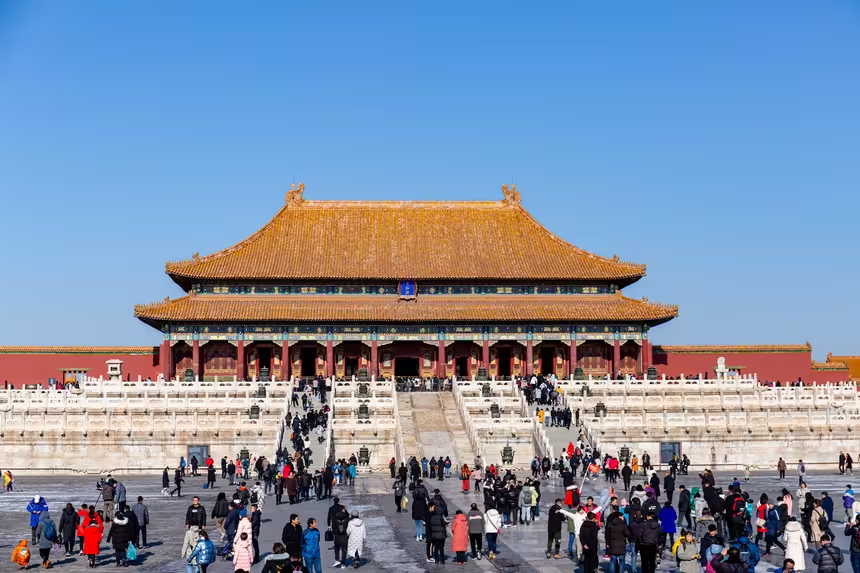
Its power comes from hierarchy. Approaching a gate, crossing a courtyard and entering another enclosure gradually controlled visibility and access. The imperial palace occupied the political centre; ritual buildings and markets were placed according to a larger cosmological and administrative order. Architecture translated government into distance, symmetry and controlled movement.
Calling the axis a straight line can obscure the experience. Width contracts and expands, roofs appear above walls, and the artificial hill of Jingshan provides the panoramic point from which the composition becomes legible. Sound and time mattered as well: the Bell and Drum Towers regulated daily rhythms, while ceremonies activated spaces that can seem empty today.
World Heritage status also creates difficult responsibilities. Protecting rooflines and sight lines can conflict with housing, accessibility and modern services. Historic neighbourhoods are not stage scenery; residents need sanitation, heating and safe buildings. Conservation is strongest when it improves everyday life without erasing the fine-grained fabric that gives the axis meaning.
Visitors should therefore resist treating the route as a race from one landmark to another. Walking selected sections and observing transitions reveals more than attempting the full distance in one day. The axis is valuable because it allows imperial ritual, twentieth-century state space and contemporary public life to be read in one continuous urban document.