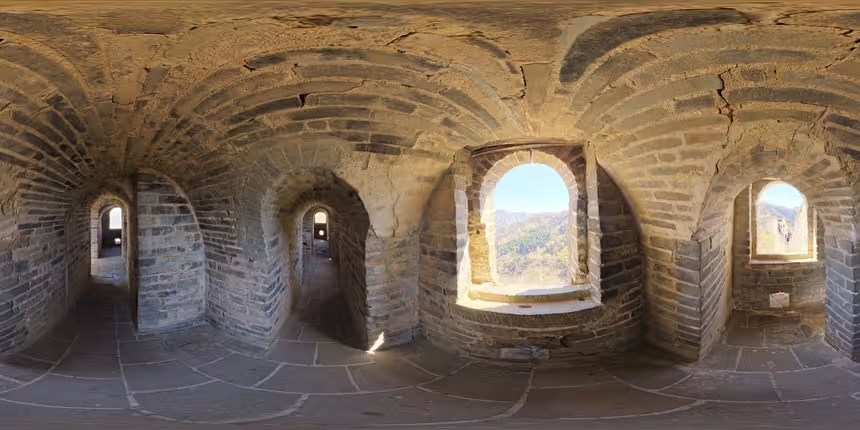
The Great Wall is not one continuous structure built by a single emperor and visible from the Moon. It is a vast family of walls, trenches, passes, beacons and garrison landscapes constructed and rebuilt by different states over many centuries. The masonry ridges near Beijing are largely associated with the Ming dynasty, while older defences may survive as eroded earthworks far from the tourist image.
Defence depended on communication and logistics as much as on height. Beacon signals transmitted warnings, passes controlled movement, and troops needed food, horses, weapons and pay. A wall without a functioning garrison was an obstacle, not an impenetrable border. Trade, diplomacy, migration and conflict continued across and around it.
Its line follows terrain because mountains reduce the number of places that must be defended and offer observation. Construction materials were local: tamped earth in dry regions, stone and fired brick where supply and transport allowed. The apparent unity of the monument therefore contains significant technical and regional variation.
Popular sections such as Badaling are heavily restored and accessible. Mutianyu offers another managed experience, while unrestored “wild” sections can be unstable, illegal to enter or dangerous in bad weather. Romantic photographs often hide crumbling parapets, missing steps and the difficulty of rescue. Choosing an authorised route is conservation and safety, not a lesser form of adventure.
Erosion, vegetation, storms, construction and souvenir removal all damage the remains. Over-restoration can be harmful too when modern materials erase historic evidence. Conservation must decide which period to preserve and how much reconstruction is honest. Local communities are indispensable because they encounter damage long before a central authority does.
The Wall has also accumulated modern meanings, from national symbol to tourist brand. Those meanings should not overwrite the lives of soldiers and civilians who built, supplied and crossed it. Read as infrastructure rather than myth, the Great Wall becomes more impressive: not a magical line, but an immense and imperfect attempt to organise territory, information and power across a difficult landscape.