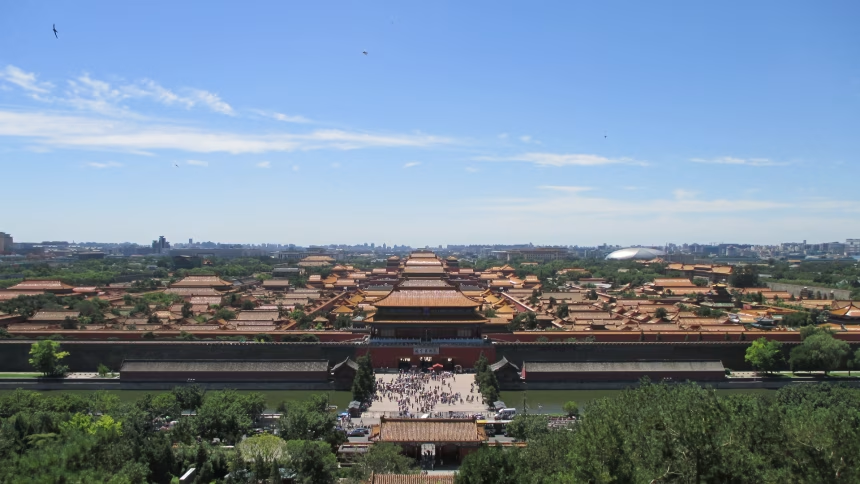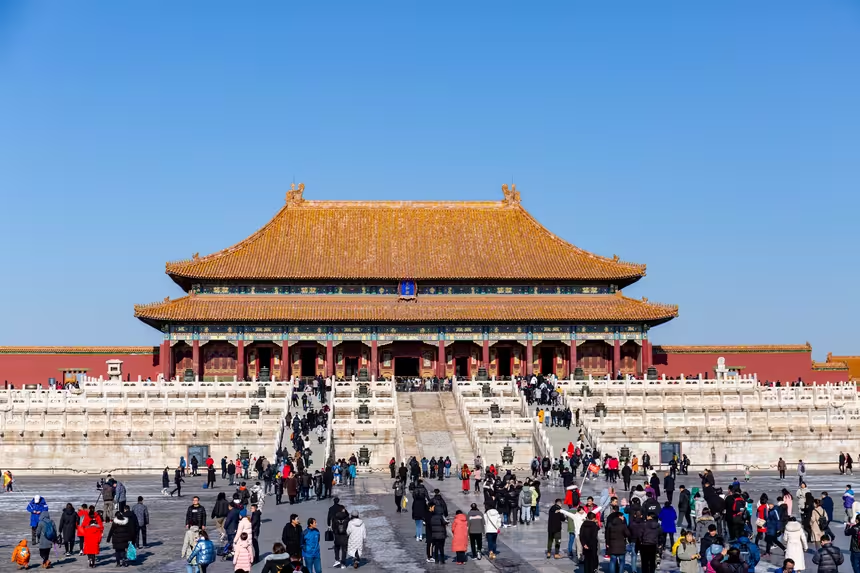
The Palace Museum opened in 1925, fourteen years after the fall of the Qing dynasty and one year after the former emperor Puyi was expelled from the Inner Court. Its creation was a political and cultural transformation: buildings and objects associated with dynastic sovereignty were catalogued as a national collection and opened, however imperfectly, to the public.
The transition required more than unlocking gates. Staff had to inventory an enormous and unevenly documented collection, establish departments and decide how a palace should become a museum without ceasing to be an architectural monument. The institution inherited court classifications but also introduced modern archaeology, conservation and public display.
War soon made mobility a question of survival. Beginning in the 1930s, selected objects were packed and transported across China to protect them from Japanese invasion. The journeys exposed collections to risk but prevented catastrophic loss. After the civil war, part of the collection went to Taiwan and became central to the National Palace Museum in Taipei, leaving a shared and politically charged heritage across the strait.
The Beijing museum endured changing political campaigns, closed periods and shifts in professional practice. Conservation science now deals with painting, paper, metal, ceramics, textiles and timber architecture under very different conditions. Rotating fragile works is not withholding culture; it is what allows light-sensitive objects to survive.
Digital access has transformed the relationship again. High-resolution images and databases enable close study far beyond the palace, but a digital record is not the material object or its architectural context. Copyright, metadata quality and long-term preservation determine whether digitisation becomes research infrastructure or only an attractive interface.
The centenary invites celebration, but also questions. Which histories of servants, artisans and ordinary workers remain underrepresented? How should dispersed collections cooperate? How can enormous visitor demand be reconciled with conservation? The Palace Museum’s achievement is not that it completed the conversion from court to public property in 1925. It is that the meaning of “public heritage” has continued to be debated and expanded for a century.