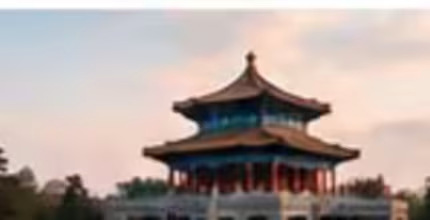
The Temple of Heaven was created in the first half of the fifteenth century as an imperial ceremonial complex. Emperors of the Ming and Qing dynasties offered sacrifices to heaven and prayed for good harvests here. Its architecture served carefully ordered state rituals rather than ordinary religious practice.
The original Altar of Heaven and Earth was completed in 1420 together with the Forbidden City. Ceremonies for heaven and earth were separated in the sixteenth century, when the Circular Mound Altar was established. The present arrangement took shape after rebuilding in the eighteenth and nineteenth centuries.
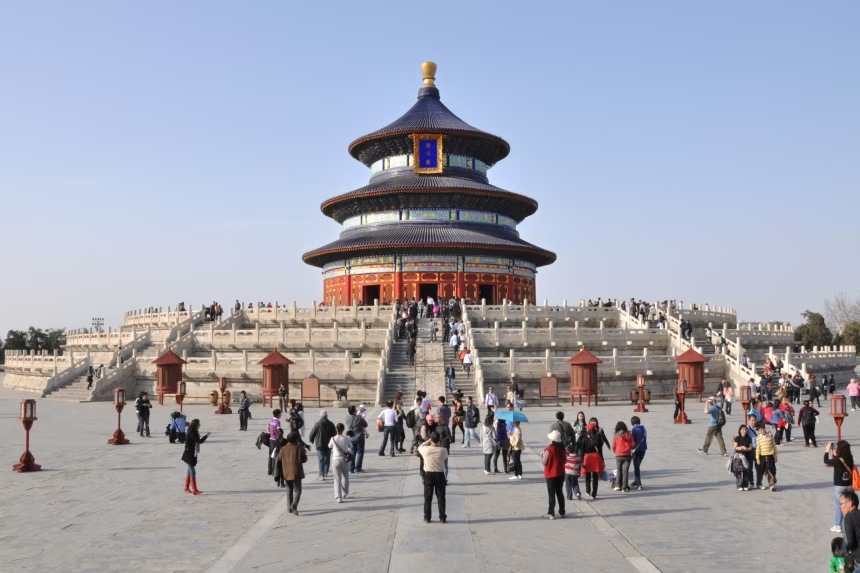
The best known structure is the circular Hall of Prayer for Good Harvests with its triple blue roof. Farther south stand the Imperial Vault of Heaven and the open Circular Mound Altar. A raised ceremonial path connects the different parts and emphasises the progression from earthly space to places intended for communication with heaven.
The symbolism can be read in shapes, colours and numbers. Circular elements refer to heaven and square plans to earth. Blue tiles evoke the sky, while the arrangement of steps and columns uses numbers that had particular meaning in traditional cosmology.
The entire historic complex contains 92 buildings and about six hundred rooms. The monuments stand among gardens and old pine trees. This combination of architecture, landscape and ceremonial route explains why the site covers a much larger area than its most famous hall.
The Temple of Heaven was inscribed on the World Heritage List in 1998. Visitors should walk the full north to south length of the complex rather than concentrate on a single photographed building. Only the sequence of altar, vault, path and main hall reveals the original meaning of the site.