Beijing's digital economy grew by 7.8 percent year on year in the first half of 2026, while its core industries grew by 9.8 percent. The municipal government has concentrated support for artificial intelligence on computing power, high quality data sets, industrial applications and the integration of hardware with software.
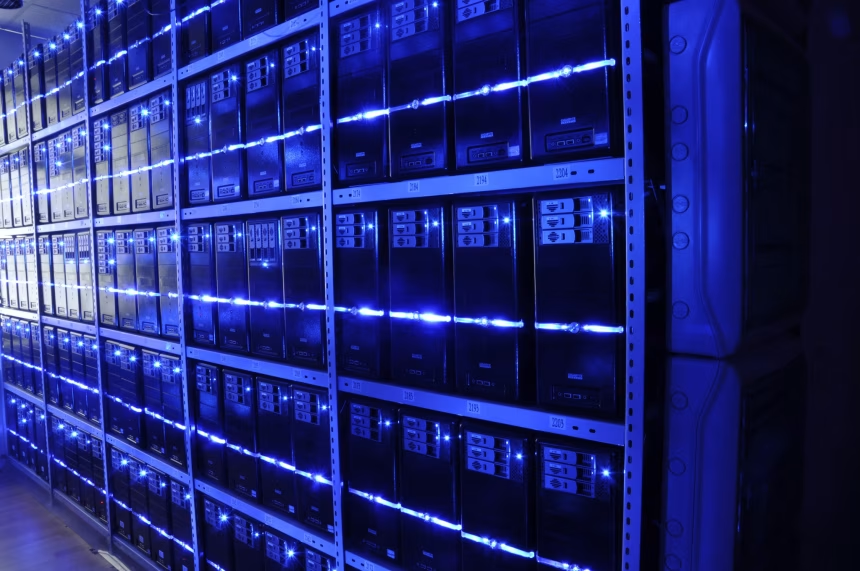
Beijing states that its intelligent computing capacity reached 82,000 petaflops after a further 22,000 petaflops were added. The figure alone does not reveal how efficiently the resources will be used, but it shows the scale of infrastructure the city regards as necessary for training and operating advanced models.
The programme also includes vouchers for computing power and data, coordinated municipal support and the development of reliable data resources. More than fifty cooperation agreements between providers and users of high quality data sets were initiated in the first half of the year. The city plans at least one hundred general and sector specific data sets for the second half.
Chips remain an important part of the wider strategy. Beijing supports the development of processor architectures, instruction sets, basic software and energy efficient chips for edge computing. The aim is not simply to produce a single component, but to align chips, algorithms, development tools and practical applications.
Municipal documents also envisage the use of AI in health care, education and advanced manufacturing. This shifts attention from general demonstrations to systems that must work with sensitive data, a clear purpose and measurable benefits. Model performance is only one part of the result in such an environment.
Beijing is therefore presenting itself as a centre for the entire technology chain. Alongside model research, it is investing in chips, computing centres, data and industrial deployment. The real test will be whether this infrastructure produces useful services and manufacturing improvements, rather than only new capacity records.