China's high speed railway network exceeded 50,000 kilometres at the end of 2025. The entire railway network in operation extended beyond 165,000 kilometres. The scale of the high speed system is changing travel between Beijing, regional centres and distant parts of the country.
According to the national railway administration, railways reach 97.2 percent of Chinese cities with more than half a million inhabitants. High speed services cover nineteen major urban clusters. The network is therefore more than a small group of prestigious lines connecting the largest metropolises.
Chinese railways carried 4.59 billion passengers in 2025. For a visitor to Beijing, this means that many cities can be reached within a day without a domestic flight. The main terminals in the capital are not interchangeable, however. A train may leave from Beijing South, Beijing West, Beijing North or Beijing Chaoyang.
Speed alone does not describe the full benefit. Service frequency, connections with urban transport and the ability to handle large passenger numbers are decisive. On busy routes, rail allows travel between city centres, while airports are often farther away.
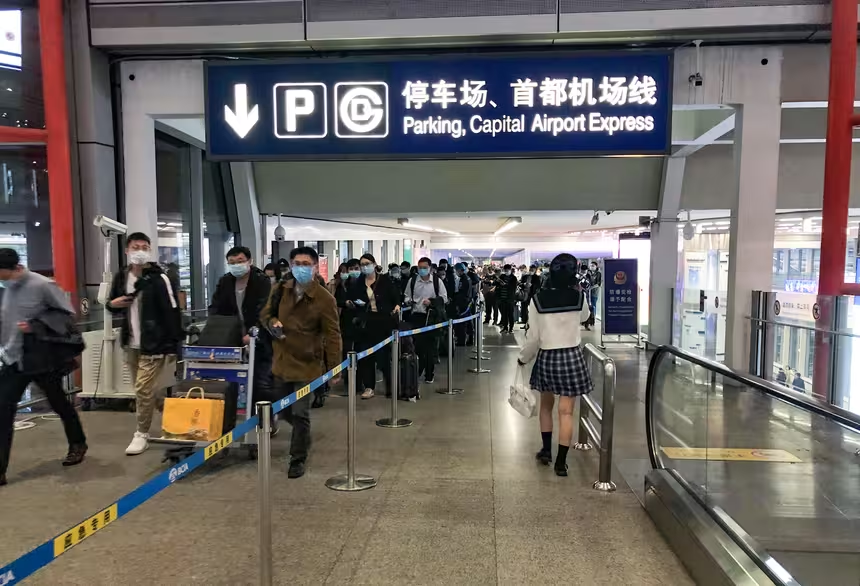
Before travelling, passengers must check the precise station name, train number and the identity document used for the purchase. Tickets are linked to the traveller's identity. Access to station buildings includes a security check, so arriving with time to spare is advisable.
The network makes Beijing a starting point for fast connections to Shanghai, Tianjin, Xi'an and many other centres. Passing 50,000 kilometres matters chiefly because it makes high speed rail ordinary transport infrastructure rather than an exceptional way to travel.