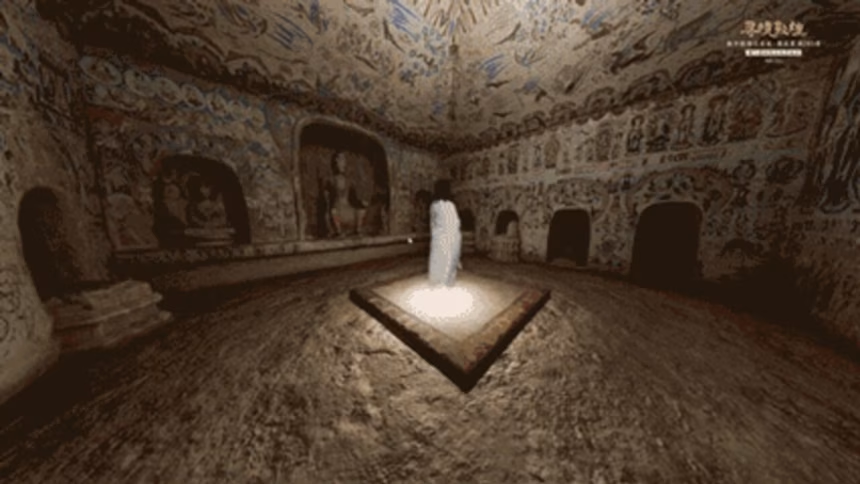
Virtual reality is making the decoration of the Mogao Caves accessible to people who cannot visit the original site. A digital environment can reveal murals and spatial details in places whose history reaches back more than a thousand years.
Cave art is highly sensitive to humidity, dust, temperature and intense visitor traffic. Any experience that moves part of the demand into a digital setting can reduce pressure on the physical space and help fragile works survive longer.
A convincing virtual visit requires careful photography, accurate spatial scanning and sensitive colour interpretation. Technology can reveal details that are hard to see with the naked eye, but it should not replace professional documentation.
A digital copy cannot reproduce an encounter with the original, yet it can connect education, tourism and conservation. It is most valuable when it explains context and respects the limits of what is genuinely known about the art.