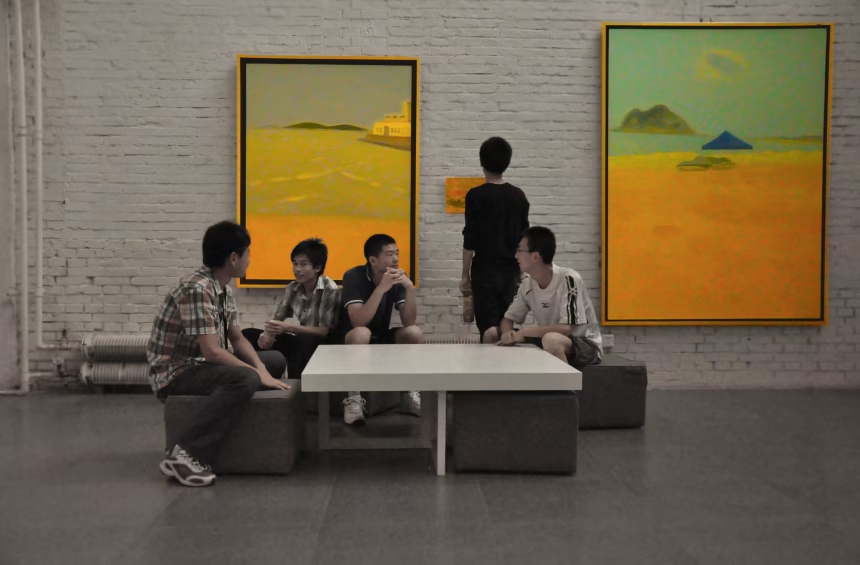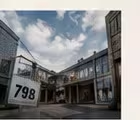
Beijing's 798 zone and the adjoining 751 complex occupy a former industrial site in Chaoyang District. Factory halls, brick facades, pipes and tall north facing windows now accommodate galleries, museums, studios, design shops and cultural events.
The official tourism profile gives an area of more than half a million square metres and over six hundred resident organisations. Their activities extend beyond visual art to film, theatre, fashion, architecture, furniture, music, food and creative technology.
Architecture from the 1950s influenced by the Bauhaus is an important part of the district's identity. The industrial buildings were not covered by one uniform new style. Many spaces retain original structures, signs and production scale, which contrast with contemporary installations.
798 is home to UCCA Center for Contemporary Art, 798CUBE, cultural centres representing several countries and many smaller galleries. The offer changes regularly. There is no single compulsory route, and the quality of a visit depends on the current exhibition programme.
Entry to the district itself is free, but individual exhibitions may require a ticket or reservation. The area remains accessible throughout the day. Each institution has its own hours, and many galleries are closed on Mondays.
The district is located on Jiuxianqiao Road. Visitors should allow several hours and select two or three main exhibitions in advance. The remaining time can be used to walk through the industrial site, because the relationship between its architecture and new cultural activity best explains the significance of 798.