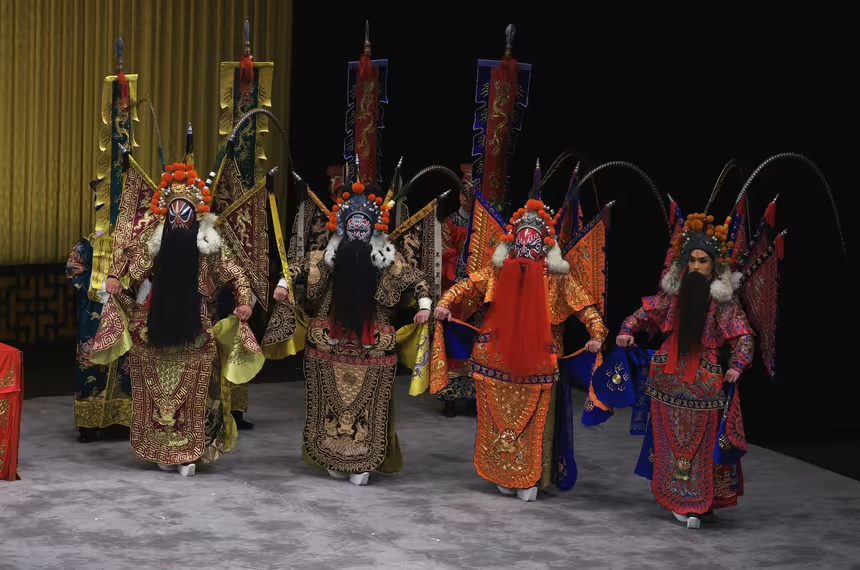
Peking opera can initially seem inaccessible because singing, percussion, costume and gesture follow conventions that are not explained during a performance. The solution is not to decode every sign before buying a ticket. A few principles allow the stylisation to become legible while leaving room for surprise.
Four broad role families organise the stage: sheng male roles, dan female roles, jing painted-face characters and chou comic roles. Each contains many specialisations defined by age, status, voice and movement. The categories are a practical map, not a complete description of every performer.
Face colours can suggest character—red is often associated with loyalty, white with cunning, black with upright force—but context matters. Costume, vocal style and action are more reliable together than a colour chart. The painted face is not everyday psychology; it enlarges a moral and dramatic presence for the theatre.
An almost empty stage can become a room, mountain or battlefield. A circle with a whip represents riding; repeated steps describe a long journey; a table and chairs change meaning through position. Percussion marks entrances, combat and emotional turns, while strings support highly trained vocal lines. Convention allows speed and imagination without realistic scenery.
Modern audiences can choose a full evening or a programme of famous scenes with subtitles. Reading a short synopsis helps, but watching the performer’s control of sleeve, gaze and rhythm is more important than following every word. Peking opera survives not as a museum code but through training, new interpretation and spectators willing to learn its grammar in real time.