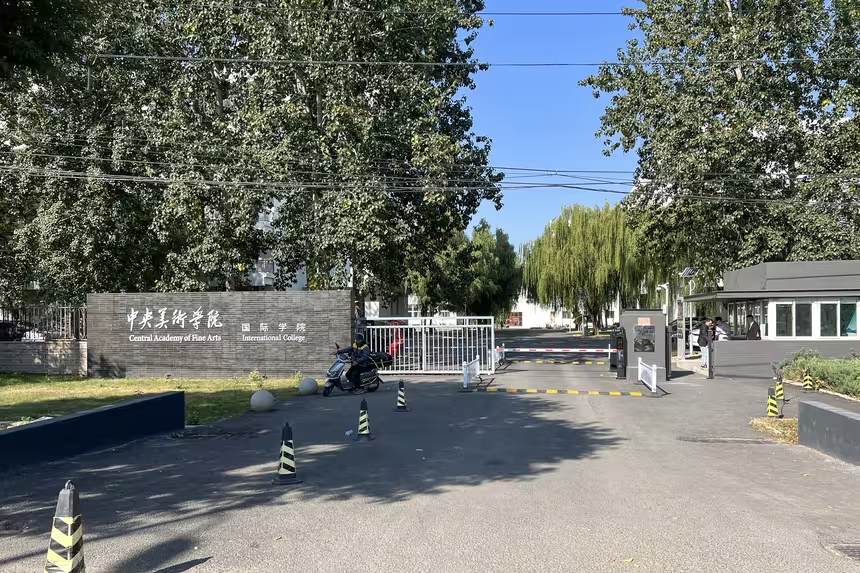
The Central Academy of Fine Arts in Beijing sits at the intersection of artistic traditions that are often presented separately. Ink painting and calligraphy, European academic methods, twentieth-century socialist realism, design, architecture and digital media coexist within one institution and a contested national history.
An academy does more than teach technique. Entrance exams, studio structures and exhibitions decide which abilities become visible and which styles gain legitimacy. Rigorous drawing can provide a common language, yet a fixed model can also reward conformity. Good education must make foundations available without turning them into a single authorised aesthetic.
CAFA’s museum and archives connect student work to historical collections and contemporary exhibitions. This institutional memory matters in a rapidly changing art market. It enables artists to understand that “tradition” was repeatedly reinterpreted rather than handed down unchanged.
Artificial intelligence adds a new pressure. Generative tools can propose images, analyse archives and accelerate experimentation, but they also raise questions of training data, authorship and homogenised style. Teaching a prompt is not enough; students need to examine who owns the model, whose work it learned from and how a result can be documented.
The academy’s influence extends through teachers, museums, public commissions and cultural administration. That makes critical independence especially important. Its future will not be decided by choosing ink over code or the reverse, but by whether students can use both historically and responsibly, while developing a practice that cannot be reduced to the institution’s preferred answer.