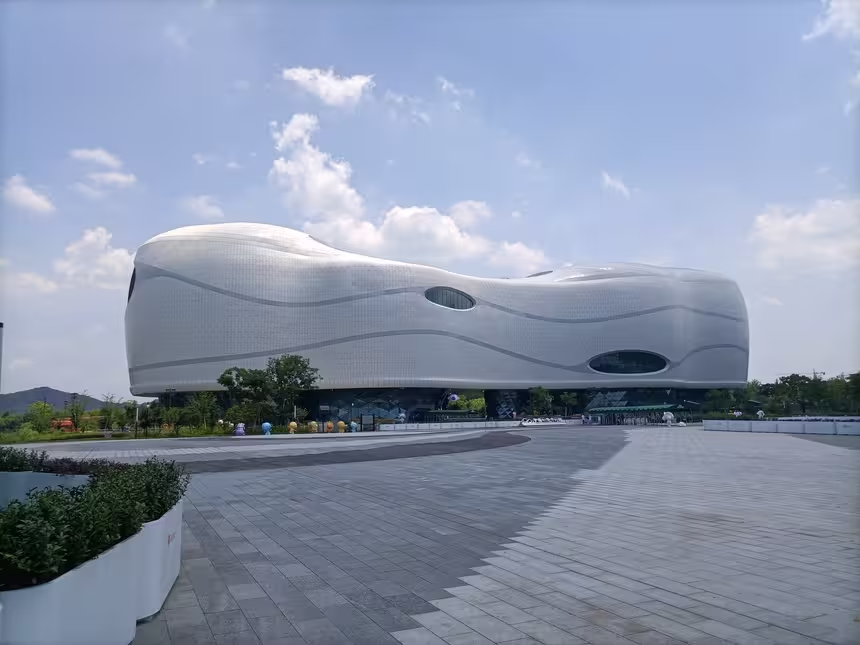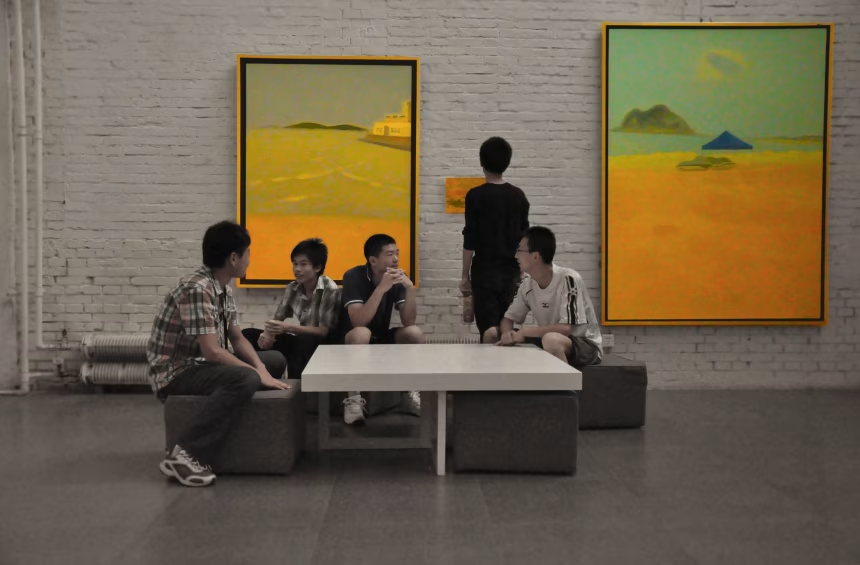
UCCA began in Beijing’s 798 district in 2007 and became one of the most visible institutions for contemporary art in China. Its history includes foreign founders, changes of ownership, sponsorship and expansion to other cities. That mixture makes it useful for examining what a non-state art institution can be.
Exhibitions require more than a famous name. Curators research, borrow and contextualise work; registrars, technicians, conservators and educators make it accessible and safe. A serious institution also keeps archives and supports scholarship, even when those activities attract less attention than an opening night.
Private funding provides agility but creates dependencies. Sponsors may enable ambitious programmes while seeking prestige and audiences. Transparency about support and curatorial independence matters, as does a balanced model that does not make ticket income the only definition of public value.
Operating in China means navigating regulation and changing boundaries of expression. It is too simple either to dismiss every exhibition as compromised or to treat an international brand as proof of freedom. The meaningful questions concern what work is shown, what is absent, how decisions are explained and whether artists can develop long relationships with the institution.
UCCA’s strongest public role lies in creating continuity. Contemporary art needs places where work can be encountered, debated and preserved beyond an auction cycle. As the organisation expands, it must avoid turning each city into a copy of the same lifestyle venue. Institutional maturity means remaining locally specific while sustaining professional standards and public memory.