Chinese calligraphy uses writing as visual and bodily art, but it cannot be reduced to neat characters. The viewer reads pressure, speed, ink, rhythm and the relation between strokes. A line records how a flexible brush touched, turned and left the paper; controlled variation often matters more than regularity.
Five broad scripts provide a map. Seal script preserves archaic, balanced forms; clerical script broadens horizontal strokes; regular script gives a structured standard; running script connects movement; cursive can compress characters dramatically. They overlap historically and a single work may mix tendencies.
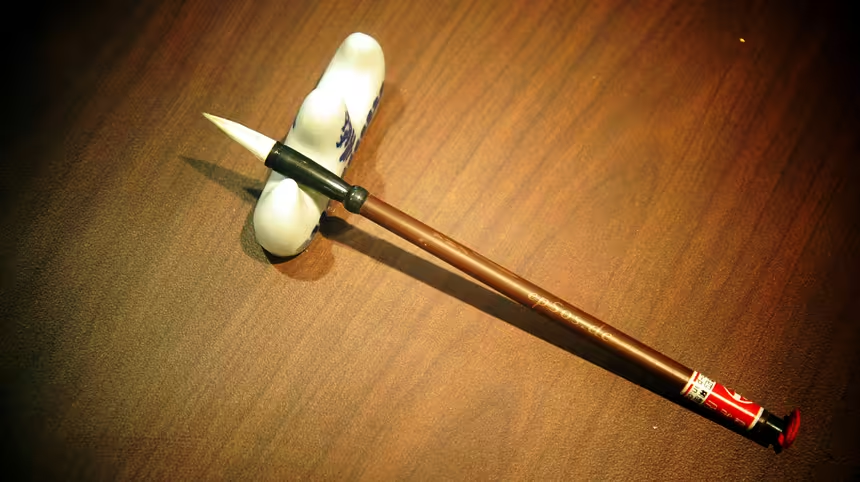
Tools change the result. Brush hair, ink density, absorbency of paper and the smoothness of an inkstone affect every mark. “Four Treasures of the Study” is not merely a ceremonial phrase: material knowledge is part of practice. A digital font can copy an outline but not the event that produced it.
Calligraphy also carries text. A viewer who only admires shape may miss a poem, letter, colophon or political context. Copies and inscriptions transmit earlier models, while seals and later notes document ownership and reception. Authorship therefore requires analysis of material, style and provenance, not resemblance alone.
Learning begins with copying, which in this tradition is a method of entering another hand’s decisions rather than simple plagiarism. Individual expression emerges through disciplined repetition. For a newcomer, the best question is not “Is this character pretty?” but “Where does the movement accelerate, pause or change weight?” The answer turns writing from decoration into time made visible.