Film preservation begins long before an old title receives a 4K premiere. Archives must locate prints and negatives, identify versions, stabilise material and document rights. Chinese cinema is dispersed among studios, regional archives, private collections and institutions abroad, while wars, humidity, fire and political upheaval have destroyed or separated many elements.
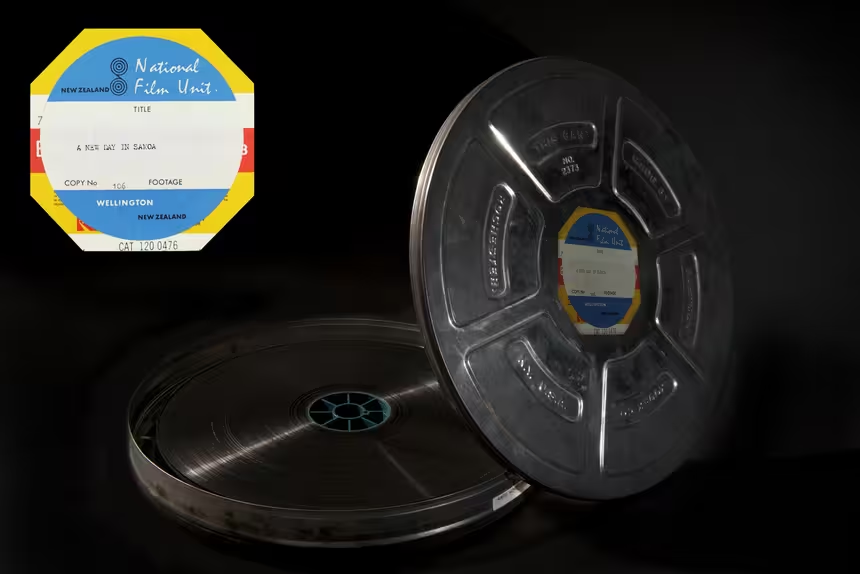
Photochemical film deteriorates in specific ways. Nitrate stock can burn; acetate develops vinegar syndrome; colour dyes fade. Cold, dry storage slows damage but does not reverse it. A digital scan creates access and a new preservation element, yet the original remains valuable because future technology may recover information better.
Restoration is a chain of decisions. Technicians repair tears, stabilise the image, remove damage and reconstruct sound, but they must not polish away grain or alter lighting to suit current taste. Different release versions may contain different edits and subtitles. An archive should record what it changed and why.
Artificial intelligence can find scratches, interpolate missing frames or separate voices from noise. Used without supervision, it can invent textures, distort faces and erase details it mistakes for defects. A plausible image is not necessarily a historically accurate one. Human comparison with source material remains essential.
Access completes preservation. Screenings, contextual essays, subtitles and research copies allow a film to re-enter culture rather than survive as an inaccessible file. Rights disputes and commercial neglect can make a technically restored film invisible. Saving Chinese cinema therefore requires legal and curatorial work alongside laboratories—and honest acceptance that some losses cannot be generated back into existence.