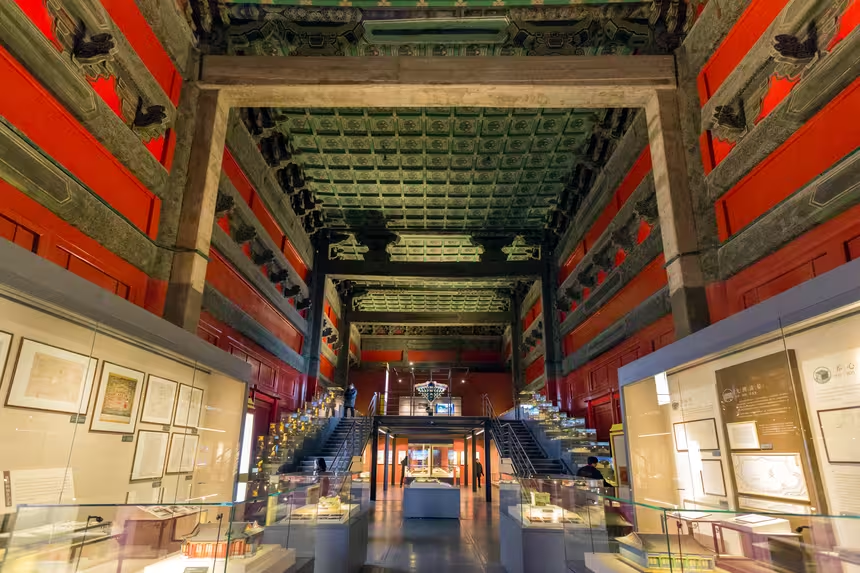
Digitisation allows a handscroll, seal or palace interior to be examined far beyond the museum. High-resolution photography reveals brushwork, databases reconnect related objects and three-dimensional recording can document a fragile building before repair. For the Palace Museum, whose collection and architecture cannot all be displayed at once, this is a major expansion of access.
A digital image is nevertheless a new object, not a transparent substitute. Lighting, colour calibration, lens and screen affect what the viewer sees. A scroll experienced as a sequence becomes a single zoomable surface; a sculpture loses scale. Good platforms state how the record was made and what it cannot reproduce.
Metadata determines whether millions of files become knowledge. Names, dates, materials, inscriptions, provenance and conservation history must use consistent standards and record uncertainty. An attractive interface with weak metadata is difficult to search and almost impossible to preserve or exchange.
Artificial intelligence can identify visual similarities, transcribe text and suggest links, but its result is a research lead rather than evidence. Models inherit errors and gaps from catalogues and may confidently merge different names or periods. Scholars need access to the source record and a way to correct the system.
Digital access also raises rights and sustainability questions. Public-domain heritage should not be enclosed by unnecessary restrictions, while living artists and sensitive information require care. Files need migration, backups and stable funding long after a launch. A digital museum succeeds when it strengthens research and public understanding over decades—not when a virtual tour briefly looks futuristic.