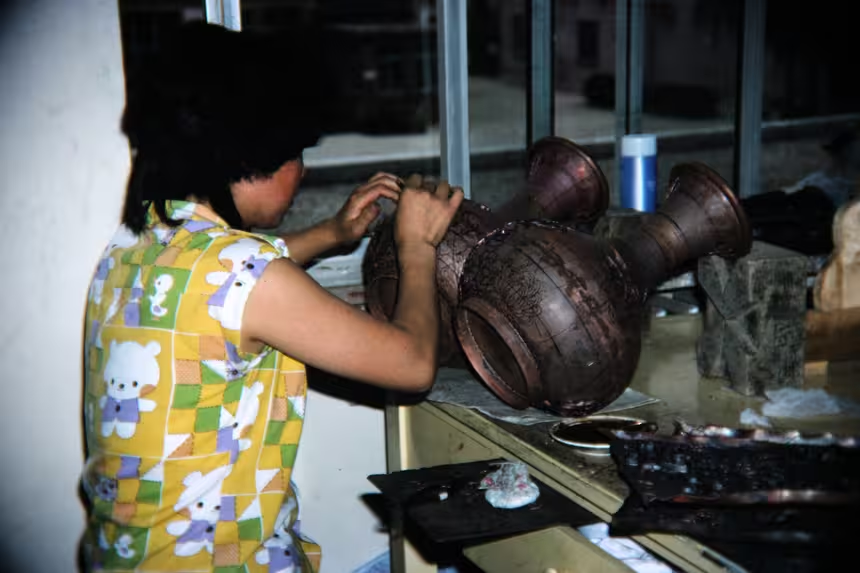
Jingtailan is Beijing’s celebrated form of cloisonné enamel. A metal body is shaped, fine wires are bent and attached to create compartments, coloured enamel paste fills them, and repeated firing, grinding and gilding produce the final surface. The smooth object conceals a sequence in which an error at a late stage can destroy weeks of work.
The name refers to the Jingtai reign of the Ming dynasty and the blue commonly associated with historic examples, although the technique developed across regions and through exchange. Presenting it as a single unchanged national invention hides both earlier metal-enamel traditions and later innovation.
Wire defines the drawing but also restrains enamel during firing. Colours shrink and may need several fillings; temperature must fuse the glassy material without deforming the metal body. Polishing reveals the pattern and removes unevenness, while gilding protects and unifies exposed metal.
Craft value depends on skilled labour, not simply the number of colours. Factory souvenirs, studio works and museum pieces occupy different markets. Buyers should look at the regularity of wire, enamel surface, finishing and documented maker rather than assume that every blue vase represents the same quality or period.
Survival requires more than preserving old motifs. Apprentices need paid time to master dangerous and repetitive processes, and designers need space to adapt form without turning every change into loss of authenticity. Jingtailan remains alive when the chain of material knowledge is visible and fairly supported—not when an anonymous workshop is hidden behind a heritage label.