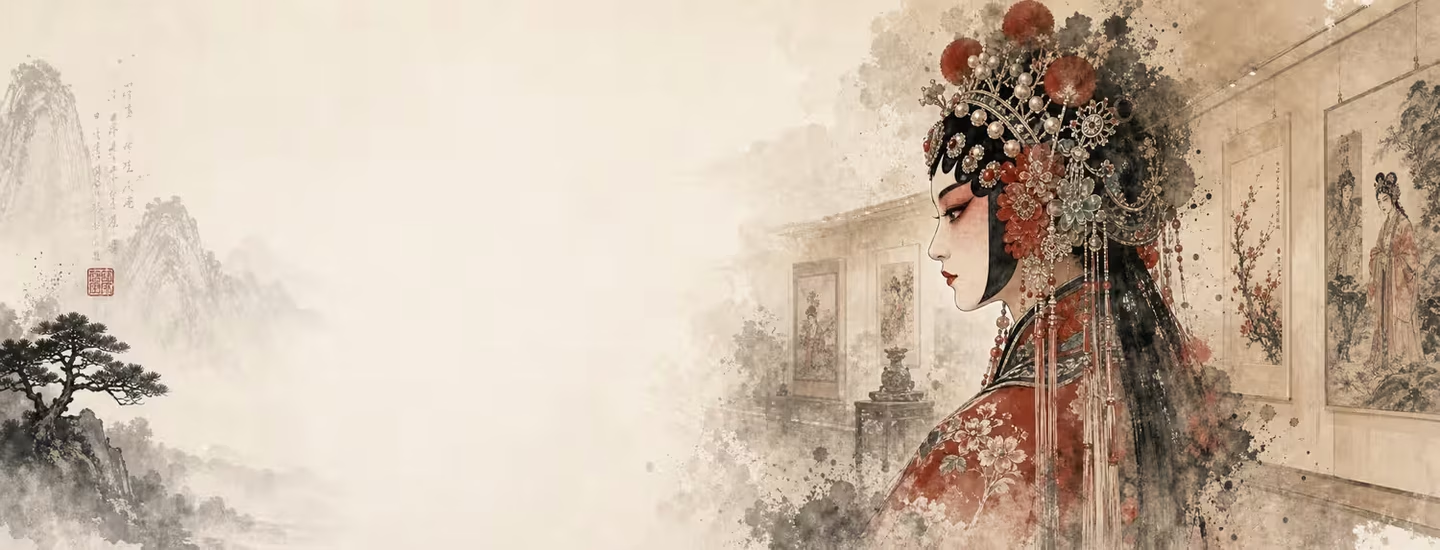
Peking opera combines singing, speech, music, acting, acrobatics and stylised movement. It does not seek realistic theatrical expression. Meaning is often concentrated in a precisely learned gesture, the rhythm of a walk, the direction of a gaze or the use of a prop.
The form became established in Beijing during the nineteenth century, when several regional theatre traditions met in the capital. Its repertoire draws on history, legends and classical literature. Individual plays can be long, although contemporary performances often present shorter well known scenes.
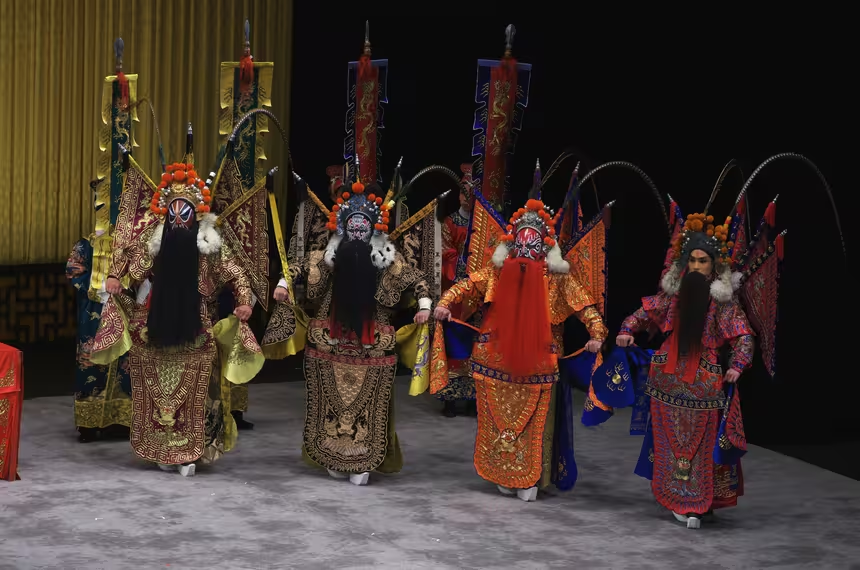
Roles are divided into several principal types. Sheng denotes male characters, dan female roles, jing strongly painted faces and chou comic characters. The colours and shapes of the makeup are not mere decoration. They help the audience recognise a character's nature, status and dramatic function.
The musical accompaniment is led by the jinghu string instrument and a percussion ensemble. Strings support the singing, while drums and gongs define movement, combat and changes in dramatic pace. A performer must therefore align voice, body and rhythm with a very precise musical structure.
The stage may be almost empty. A table and two chairs can represent a hall, inn, court or mountain depending on how they are used. A circle walked on stage can express a long journey, while a few gestures can indicate riding a horse. The audience follows a shared system of signs rather than an illusion of real space.
Peking opera was inscribed on the Representative List of the Intangible Cultural Heritage of Humanity in 2010. For a first visit, a performance with subtitles or a synopsis is helpful. Knowing the main role types and symbols turns a seemingly distant tradition into remarkably intelligible theatre.