Historian Tony Banham has spent decades reconstructing Hong Kong during the Second World War through military records, diaries, graves, family archives and interviews. His method resists a history told only from headquarters. Large events become legible when the movements and decisions of named individuals are connected.
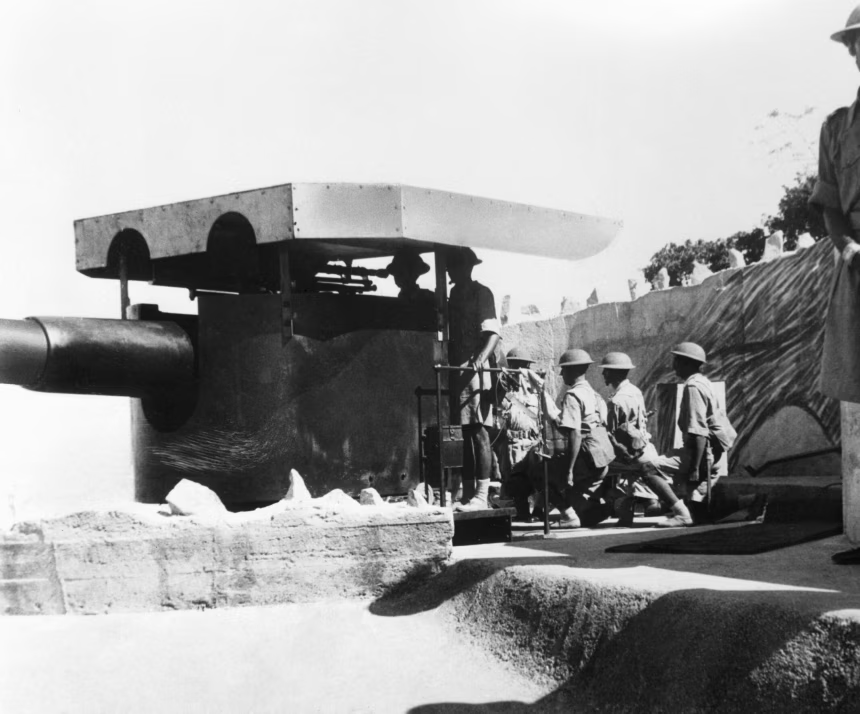
The Battle of Hong Kong began in December 1941 and ended after eighteen days with British surrender on Christmas Day. Defenders included British, Canadian, Indian and locally recruited forces, while civilians experienced shelling, displacement and the beginning of a brutal Japanese occupation. No single national narrative contains all these experiences.
Digital databases allow fragments to meet. A service number on a document may connect to a grave, a ship list and a descendant’s photograph. The work requires cautious identification because names are transliterated differently and family memory can compress events. A plausible match must remain a hypothesis until records support it.
Oral testimony is indispensable and imperfect. It captures fear, daily life and details absent from official reports, while memory changes over time. Good history does not choose between archives and witnesses; it compares them and records disagreement. Respect for a survivor does not require treating every date as exact.
The subject also involves descendants searching for missing relatives. Researchers must communicate uncertainty without turning people into data points or promising closure that evidence cannot provide. Publication may expose sensitive family information and requires consent and judgement.
Banham’s work shows how local history connects to a global war without becoming a footnote to it. Hong Kong was shaped by imperial structures, regional invasion and individual acts of endurance. Recovering names does not replace analysis; it gives analysis human scale and makes clear that every strategic line on a map crossed someone’s home.