Architect Billie Tsien describes practice less as the production of a signature form than as a long conversation with place, client, material and colleagues. Her interview in Hong Kong centred on identity, fear and language—subjects that show why architecture cannot be reduced to the confident image presented at completion.
As a Chinese-American architect, Tsien resists a simple demand to make buildings visibly express one identity. Biography affects perception and responsibility, but no façade can contain a person’s entire cultural position. The more useful question is how experience sharpens attention to exclusion, belonging and the histories already present on a site.
Fear enters design because every important project contains uncertainty. Budgets change, institutions disagree and public buildings will be used in ways the architects cannot control. Naming fear is not weakness; it can prevent false certainty and create space for testing, listening and revision.
The partnership of Tod Williams and Billie Tsien is built on exchange rather than division into two isolated authors. A studio extends that collaboration through many people whose drawings, models and technical decisions shape the result. Architectural media often erase this labour by attaching a project to one or two names.
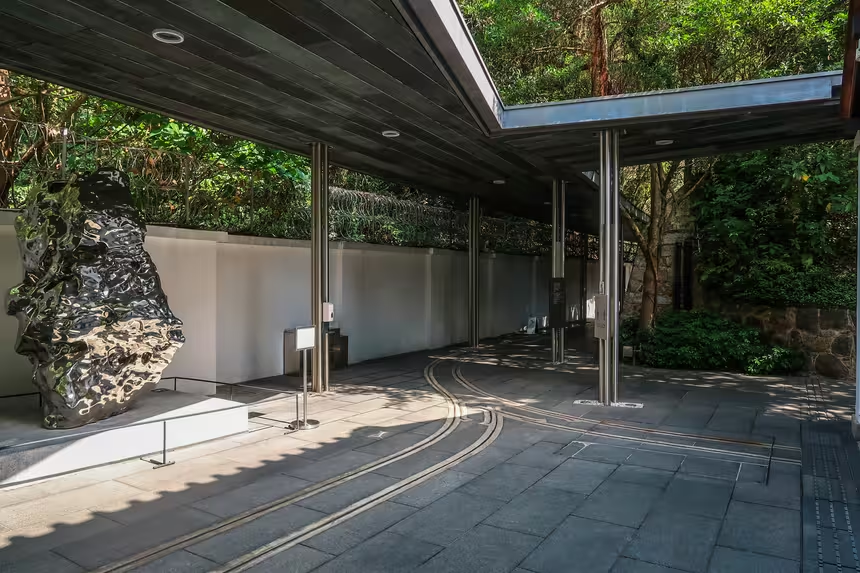
Their work values weight, touch and sequences that reveal themselves slowly. This approach is sometimes described as quiet, but quietness is not neutrality. Material choices, thresholds and places to pause decide who feels welcome and how long a building can be cared for.
Tsien’s position is especially relevant in an industry rewarded for speed and certainty. She presents architecture as a practice of sustained attention, in which a story is not a marketing theme added later but a way of understanding relationships. The finished building matters, yet the ethics of how people reached it matter as well.