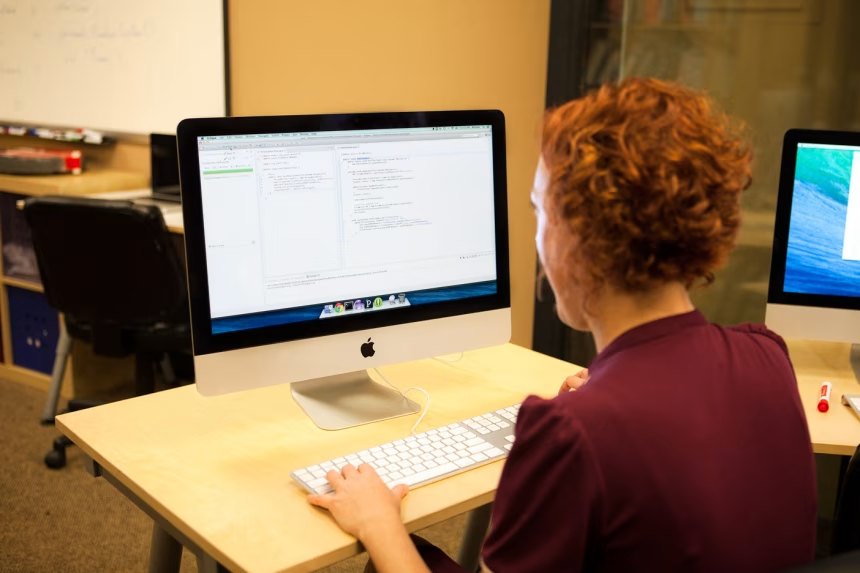
Vibe coding describes creating software by explaining an intention in ordinary language while an AI model proposes or changes code. In Beijing and Shanghai communities it has become a social practice: people arrive with an idea, build a prototype in hours and show it to others. The change is real, although “programming without programming” is misleading.
The greatest benefit appears early. A non-specialist can test a form, game, data view or personal tool without waiting for a development team. An experienced programmer can accelerate scaffolding and tests. In both cases, the prototype is evidence for a discussion, not proof of a production-ready system.
Models generate probable code and may invent a library function, ignore an edge case or use an obsolete dependency. An interface can appear correct while leaking data or accepting dangerous input. Security review, tests, version control and an owner remain necessary, particularly for payments, health and personal information.
Chinese users also work across domestic models, clouds, super-apps and mini-program rules. They need to know where data are processed and what deployment rights apply. Pasting a secret key into a prompt exposes it regardless of the model’s nationality.
Education should shift toward problem decomposition, verification and maintenance, not abandon fundamentals. Companies likewise need to prevent dozens of unowned prototypes becoming shadow IT. Vibe coding moves the point at which expertise is required: making the first version is easier, deciding whether it can be trusted becomes harder. The person who deploys it still owns the consequence.