Clarissa and Valencia Tanoesoedibjo approach vertical microdrama as a format with its own production language. Their Vshort project builds on an Asian media business while addressing viewers who watch fiction on a phone in brief, repeated sessions. The central challenge is not simply making episodes shorter.
A microdrama must establish character and conflict within seconds, place turns at much shorter intervals and end each segment with a reason to continue. A conventional television episode cut into one-minute pieces feels arbitrary. Writing must begin with the rhythm of the platform while still allowing a larger emotional arc.
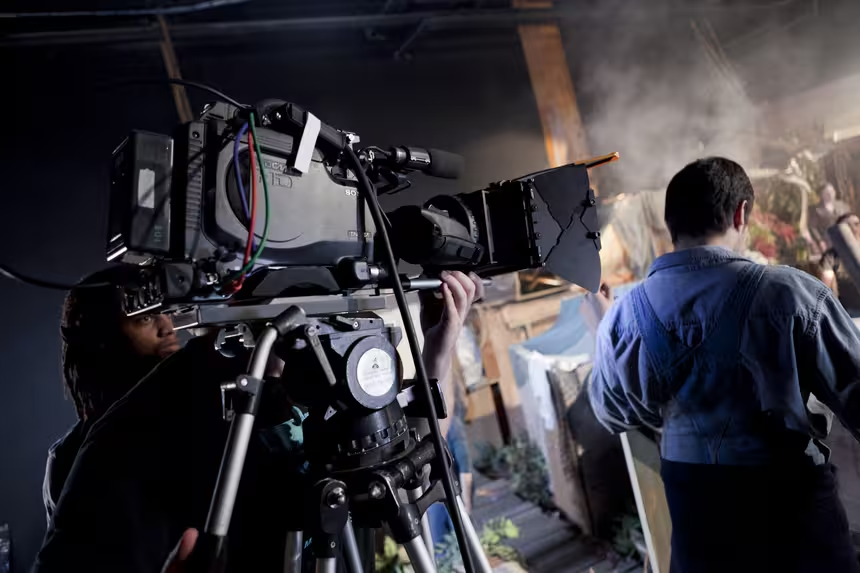
Vertical framing changes performance and production. Close-ups dominate, groups are harder to compose and locations must communicate quickly. Lower budgets and short schedules encourage standardised interiors, yet constraints can generate a direct visual grammar rather than merely cheapen the result.
The sisters’ regional ambition requires localisation. Romance, family obligation, class and humour do not travel through subtitles alone. Local writers and actors need authority to reshape a premise, while the platform maintains production knowledge and distribution. A global catalogue should not make every culture speak in the same melodramatic accent.
Monetisation creates ethical pressure. Cliffhangers can serve storytelling or manipulate viewers into repeated micro-payments. Clear pricing, spending limits and protection of minors are part of the format’s credibility. Vshort’s long-term test is whether it can use data to understand audiences without allowing the metric for the next click to replace the value of the complete story.