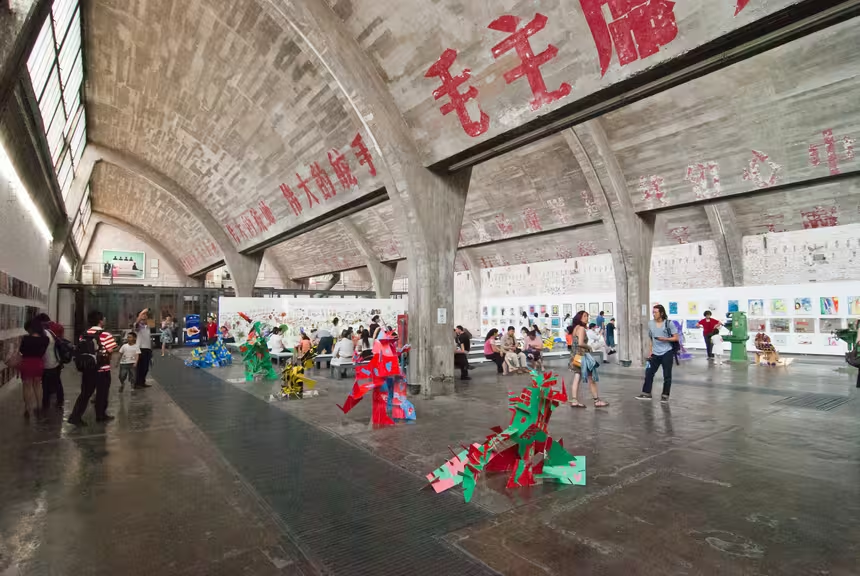
The 798 Art District grew inside an electronics factory complex built in the 1950s with East German assistance. Its north-lit sawtooth roofs, large halls and remnants of industrial slogans offered artists cheap space at a time when Beijing’s contemporary scene lacked stable institutions. What began as improvised occupation became an internationally recognised cultural address.
Industrial architecture made the transformation possible. High ceilings, robust floors and repetitive bays could accept studios and large installations with limited alteration. Bauhaus-influenced design acquired a new history through use. Preserving old machines and inscriptions can make this layering visible, provided they are not reduced to decorative props.
Success changed the economics. Galleries, cafés, design shops, fashion events and tourists raised rents and visibility. Some pioneering artists left, while established institutions moved in. This is not simply betrayal: districts need investment and safety. The problem begins when the cultural work that created value can no longer afford to remain.
798 also sits within China’s changing boundary between experimental art, market and regulation. International galleries and collectors bring resources, while exhibition limits and commercial pressure shape what is shown. An art district is never automatically free because it occupies an old factory.
The area’s brand now competes with its function. Visitors may photograph pipes and brick walls without entering an exhibition, and events use “industrial” atmosphere as a generic commodity. Good programming restores specificity by connecting current work to labour history, technology and the communities around the site.
The future of 798 depends on maintaining a mixed ecology: major museums, small galleries, production space, education and ordinary public routes. If every square metre must achieve luxury retail returns, the district becomes a theme park of its own past. Its enduring importance lies in demonstrating that adaptive reuse is not a single conversion, but a continuing negotiation over who may make culture in the city.