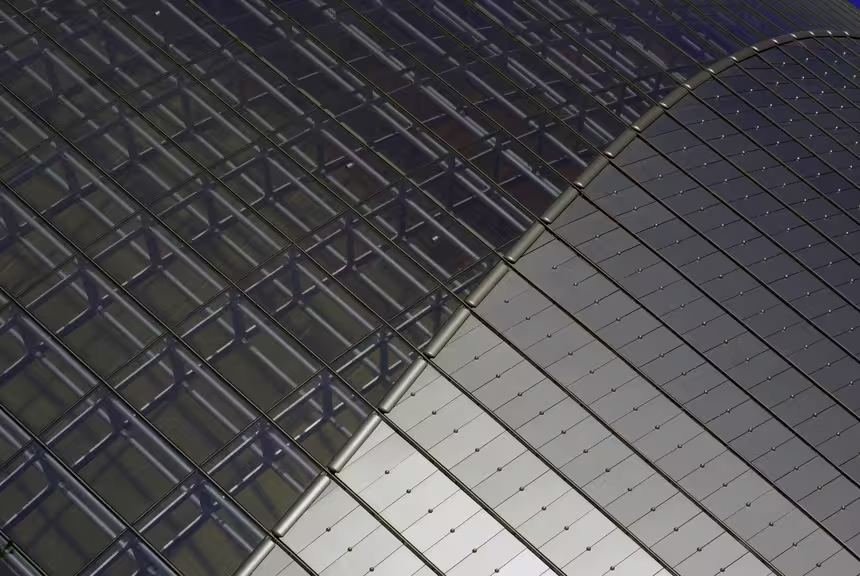
The National Centre for the Performing Arts sits immediately west of Tian’anmen Square as an elliptical titanium-and-glass dome surrounded by water. Paul Andreu’s design appears almost self-contained, earning the popular name “the Egg”. Its radical contrast with the monumental state buildings nearby was deliberate and controversial.
Visitors enter through a route beneath the reflecting pool. The descent separates the performance complex from traffic and turns arrival into a sequence of compression and revelation. Inside, opera, concert and theatre halls occupy separate volumes under one shell, connected by a public interior street.
The pool is more than a mirror. It keeps distance around the dome and makes the building read as an object in a large urban field. It also creates maintenance, waterproofing and accessibility demands. An iconic gesture succeeds only when everyday operation can support it.
Acoustics require spaces to be insulated from one another and from metro and road vibration. Each hall therefore has its own technical identity within the shared envelope. Audiences experience the smooth public shell, while stage machinery, rehearsal rooms, loading and ventilation occupy a much more complex hidden world.
Critics questioned whether a futuristic form should sit so close to historic and political landmarks. The debate reveals a false choice if reduced to imitation versus rupture. Copying traditional roofs would not automatically respect context; contrast can make different periods legible. Scale, public access and the quality of surrounding space are more useful tests.
The centre’s civic value ultimately depends on programming and affordability, not titanium. A national opera house can serve a narrow elite or become a public cultural institution through education, varied repertoire and accessible common space. The “Egg” is architecturally memorable because it creates another world beneath its shell; the institution must decide who is invited into it.