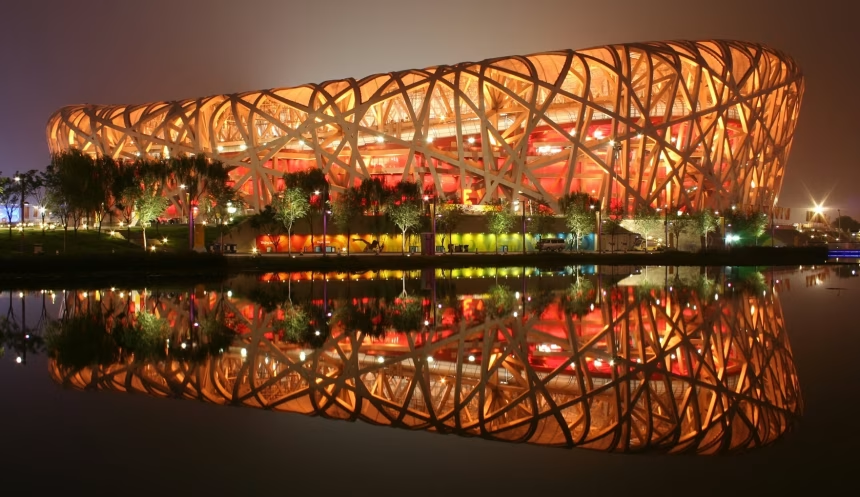
The National Stadium, designed by Herzog & de Meuron with Arup and artist Ai Weiwei as consultant, became the defining image of the 2008 Beijing Olympics. Its interlaced steel members produced the name “Bird’s Nest” and made structure, façade and ornament appear to be one system.
The apparent randomness is carefully engineered. A regular stadium bowl sits inside a huge steel lattice that supports roof and circulation while concealing stairs, ducts and secondary elements. Repetition and irregularity allow the building to look almost natural, yet the quantity of steel reveals the material cost of Olympic monumentality.
Mega-event architecture faces its hardest test after the ceremony. A stadium sized for global spectacle rarely has a full audience every week. Concerts, tourism, public events and later Olympic use keep the building active, but maintenance and the surrounding public realm determine whether it is more than a paid photograph.
Beijing reused the stadium for the 2022 Winter Olympics, giving it a rare role in two Games. Reuse is preferable to replacing a young building, although a second ceremony does not solve everyday urban integration. The Olympic Green must work on ordinary mornings and evenings, with accessible paths, shade, transport and reasons to stay.
The Bird’s Nest also carries a political contradiction. Ai Weiwei later distanced himself from the Games, while the building remained a national symbol. Architecture often outlives the coalition and message that produced it. Its public meaning can therefore be disputed without denying authorship or engineering.
The relevant question is not whether the stadium remains photogenic—it clearly does. It is how many different forms of civic life the expensive structure can support over decades. A true urban landmark is not only recognised from afar; it continues to earn its place when the television audience has left.