Beijing's tallest building is CITIC Tower, also known as China Zun. The skyscraper in the Central Business District reaches 528 metres and rises far above the surrounding development. Its outline narrows towards the middle and then widens again.
The name refers to the traditional zun ceremonial vessel. The architects did not copy its decoration literally, but used its proportions, with a wider base, slimmer middle and pronounced crown. The building combines a highly contemporary structure with a form recognisable from Chinese material culture.
The project occupies a site of approximately 11,500 square metres and provides about 437,000 square metres of floor area. Offices are its principal function. The scale is therefore defined not only by height, but also by the large volume of workplaces, lifts and technical facilities.
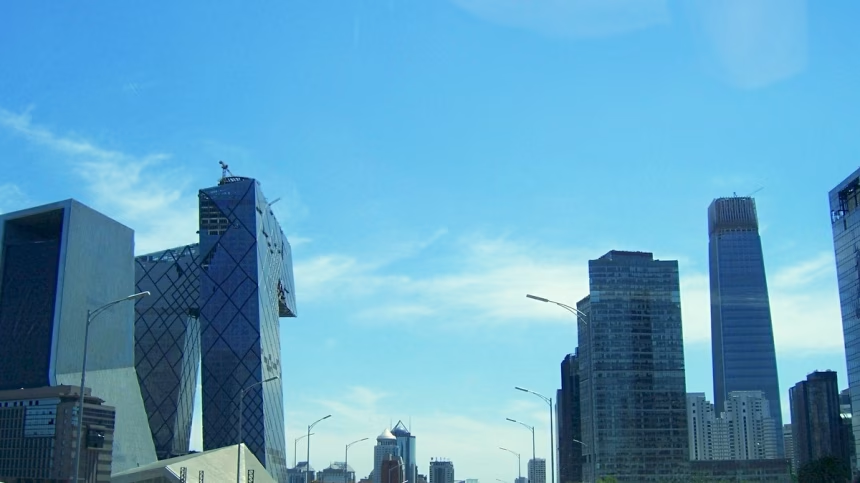
China Zun and the CCTV Headquarters create two different landmarks in Beijing's business district. CCTV uses a horizontal loop and a pronounced cantilever. CITIC Tower follows the more traditional vertical skyscraper type, transformed by the subtle shaping of its perimeter.
The historic centre remains predominantly low rise, so the tallest buildings do not form an immediate backdrop to the Forbidden City. They are concentrated in the modern commercial zone east of the centre. This preserves the legibility of the imperial axis while giving new architecture a skyline of its own.
The broader public spaces around Guomao offer the best views of China Zun. At close range, the curvature of the facade becomes clear. From farther away, its relationship to the surrounding towers is more visible. The building shows a Beijing different from the palaces and hutongs, yet it belongs just as convincingly to the city's present image.