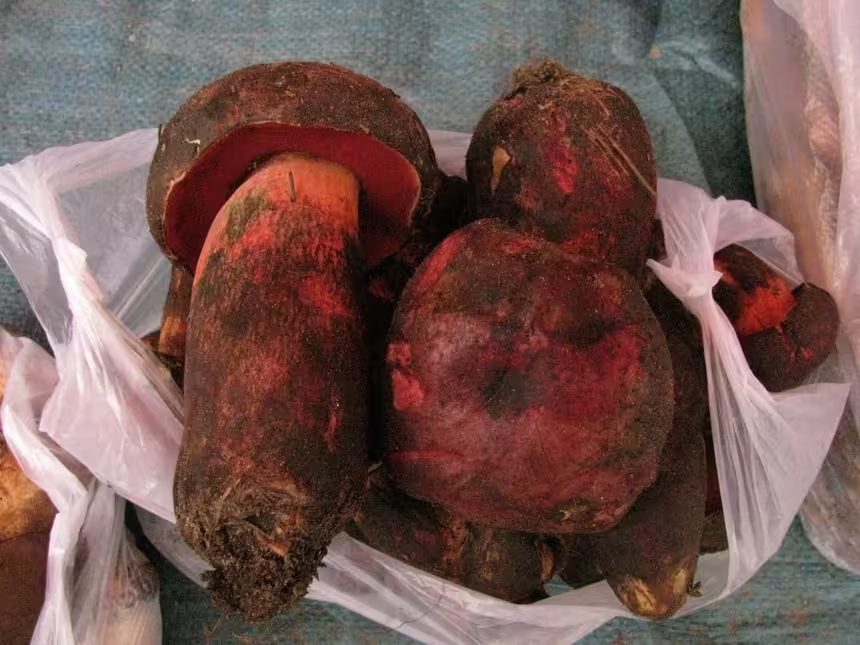
Summer rain brings hundreds of mushroom species to Yunnan and a season that influences markets and restaurants across China. Refrigerated logistics allow Beijing kitchens to serve fresh matsutake, boletes and regional varieties during a short window. High prices and prestige also increase pressure to harvest quickly and create opportunities for misidentification.
A wild mushroom is not a single kind of ingredient. Species differ in flavour, texture, ecology and safety. Some cannot be farmed conventionally because they live in symbiosis with particular trees. “Wild” is not a certificate of purity; it means variable origin and a need for exact identification.
Confusing an edible and toxic species can cause severe injury, and cooking does not destroy every poison. Folk tests with silver, onion or colour are unreliable. A personal find should not be eaten without expert knowledge, and restaurants need a traceable supplier.
Some Yunnan restaurants set a timer for mushrooms cooking at the table. This has real value only for correctly identified species whose risk is controlled by sufficient heating. A timer cannot make the wrong mushroom safe. Trust begins with identification, storage and staff training.
Growing demand can encourage premature picking and damage to soil or mycelium. Sustainable rules differ by species and forest, while drying can preserve the season and concentrate flavour without being less authentic. The most responsible courage is not eating an unknown specimen; it is accepting that some finds must remain in the forest.