Beijing has local dishes, but eating in the capital also means encountering food from across China. Migration, government, universities and business brought cooks and diners from every province. The city’s restaurant map is therefore a map of regional networks rather than one homogeneous “Chinese cuisine”.
Sichuan food is not simply extreme chilli: it balances heat, numbing pepper, fragrance, sourness and many named flavour profiles. Cantonese cooking is not only dim sum; it includes roasting, seafood, soups and careful attention to fresh texture. Hunan, Yunnan, Xinjiang, the northeast and Jiangnan each contain further internal differences.
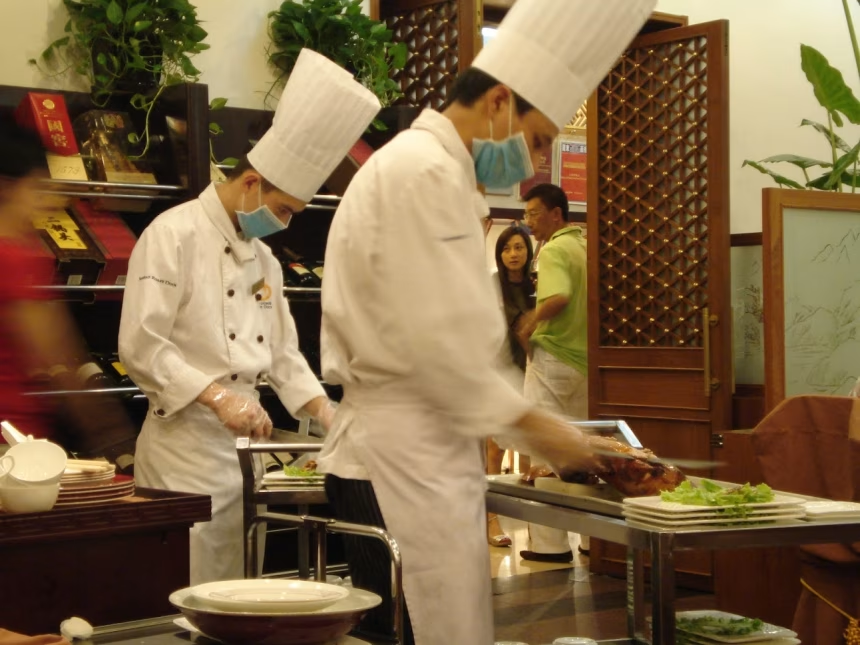
Restaurants adapt to Beijing. Ingredient supply, local taste, rent and staffing may soften seasoning or narrow a menu to famous dishes. Adaptation is not automatically inauthentic, but a provincial label can become misleading if it erases technique and diversity. Asking staff about their regional specialities is more useful than ordering the one item already known abroad.
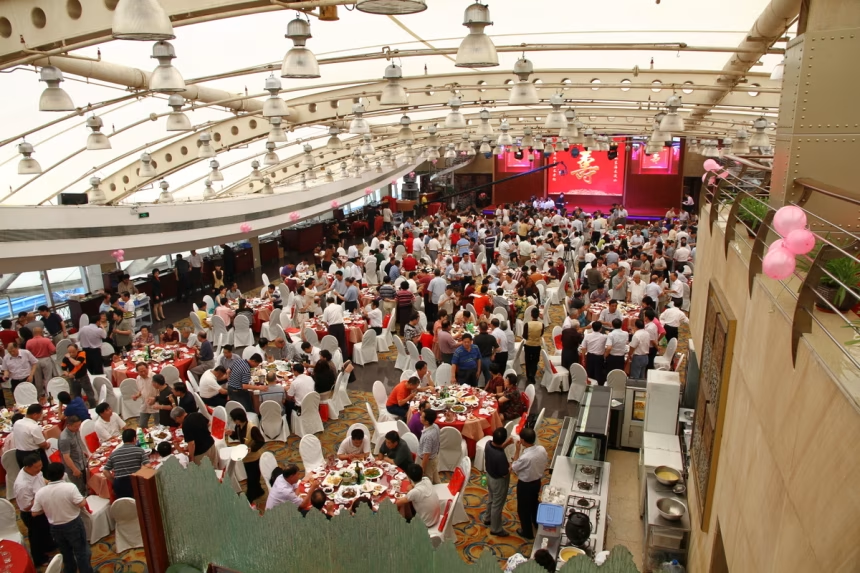
The shared table changes selection. A balanced meal combines cold and hot dishes, vegetables, protein, soup or staple and contrasting methods. Ordering one large dish per person ignores how most Chinese restaurant food is designed to circulate. Portion size should be judged for the group, not from menu photographs alone.
Beijing’s culinary strength is this density of comparison. Within a few metro stops, diners can see how noodles, fermentation, chilli or lamb change across regions. The capital does not dissolve those differences; at its best, it makes them visible and lets regional communities maintain a taste of home while others learn that China cannot be represented by one menu.