Beijing is too large for an itinerary without geography. This five day plan therefore groups places by district and limits unnecessary journeys. Reservations, opening hours and possible closures must be checked before travelling, particularly for the Forbidden City and the most visited monuments.
Day one: the Central Axis. Begin at Tiananmen Square and walk through the Forbidden City from south to north. Finish with an ascent of Jingshan, which offers the clearest view of the palace plan and the axis continuing across the city.
Day two: the Temple of Heaven and Qianmen. Spend the morning in the Temple of Heaven ceremonial complex. Then continue to Qianmen and Dashilar, where a historic commercial district can be combined with Beijing cuisine and traditional brands.
Day three: hutongs and Shichahai. Walk through the area between the Drum and Bell Towers, Yandai Xiejie and the Shichahai lakes. In the evening, remain by the water or choose a quieter route towards Xihai Wetland Park.
Day four: contemporary art and the modern city. Devote the morning to the 798 zone and one or two exhibitions selected in advance. Later, continue to Sanlitun or the business district around Guomao and the CCTV Headquarters.
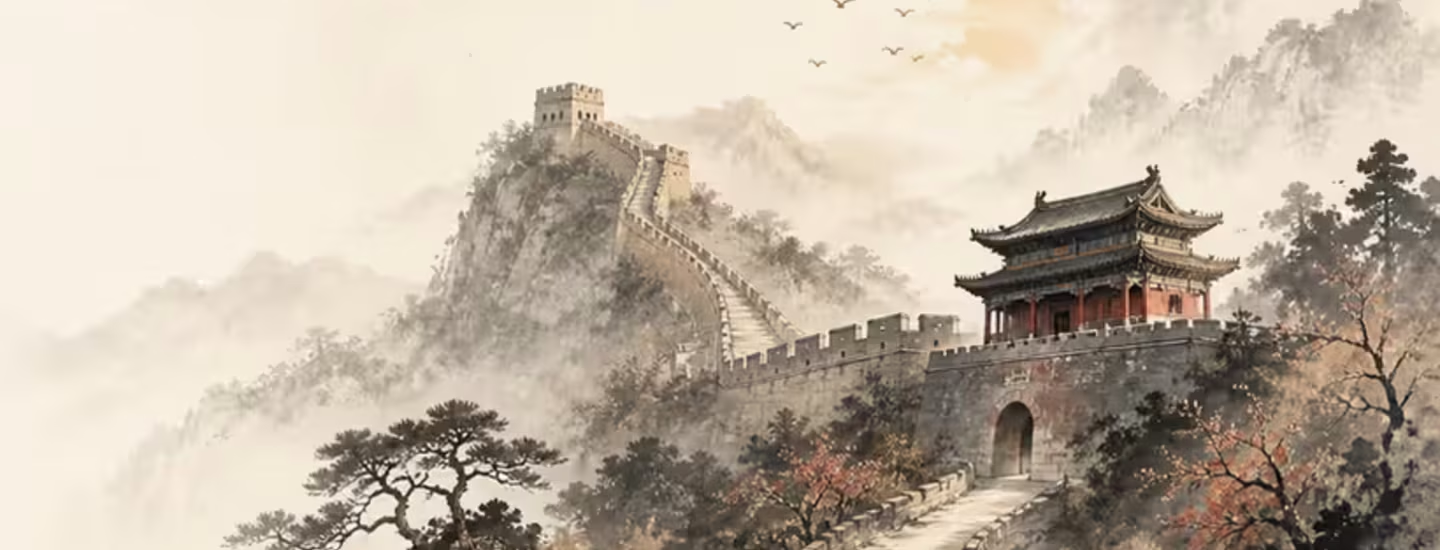
Day five: the Great Wall. A trip to one of the open sections takes most of the day. Badaling has the most developed infrastructure and a rail connection, while Mutianyu offers a different landscape and requires more careful transport planning.
The Summer Palace can replace the modern city or the Great Wall according to interest and weather. Journeys should be planned in a Chinese mapping application, with place names saved in Chinese characters. In Beijing traffic, a distance on a map may take considerably longer than the number of kilometres suggests.
The itinerary is not a list of everything important. It is designed so that each day reveals a different layer of the city: imperial order, ceremonial space, residential districts, contemporary culture and the landscape beyond the centre.