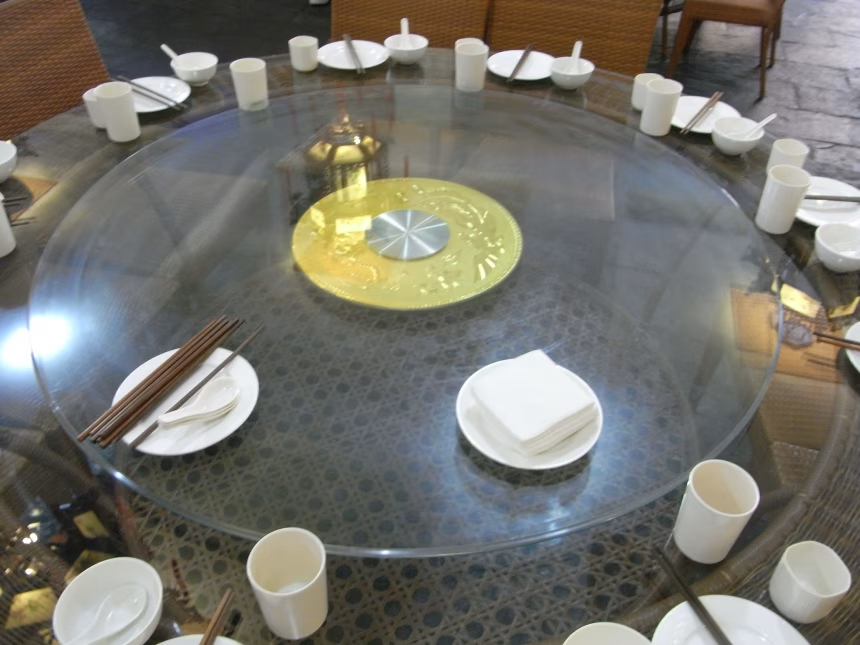
The biggest barrier in a Beijing restaurant may be the interface rather than the food. A guest scans a QR code, opens a mini-program, selects dishes and pays by phone; elsewhere a server uses a paper menu with photographs. Understanding the shared-table logic removes most of the uncertainty.
Choose dishes for the group, not one main course per person. Combine cold and hot items, vegetables, protein, a staple and contrasting cooking methods. Ask about portion size: photographs rarely show scale, and several large dishes can create expensive waste.
Translation tools help, but ingredient questions should be precise. “Vegetarian” may still include broth, oyster sauce or lard; allergies require a clear written statement because “a little” is not safe. Chilli symbols describe heat imperfectly and local advice is more useful than assuming every red dish is extreme.
Tea, water, tissues or a private room may carry charges depending on the restaurant. Check the basket before confirming a phone order and do not assume that every item placed on the table is complimentary. In most ordinary restaurants the bill is paid once for the table, with friends settling among themselves digitally.
Service may seem faster and less ceremonious than in Europe because staff expect diners to signal when needed. Showing the dish screen, asking for rice and checking whether all items arrived is normal. The aim is not to master every application but to keep control of order, ingredients and price. Once that is done, the shared table becomes one of the easiest ways to explore Beijing.