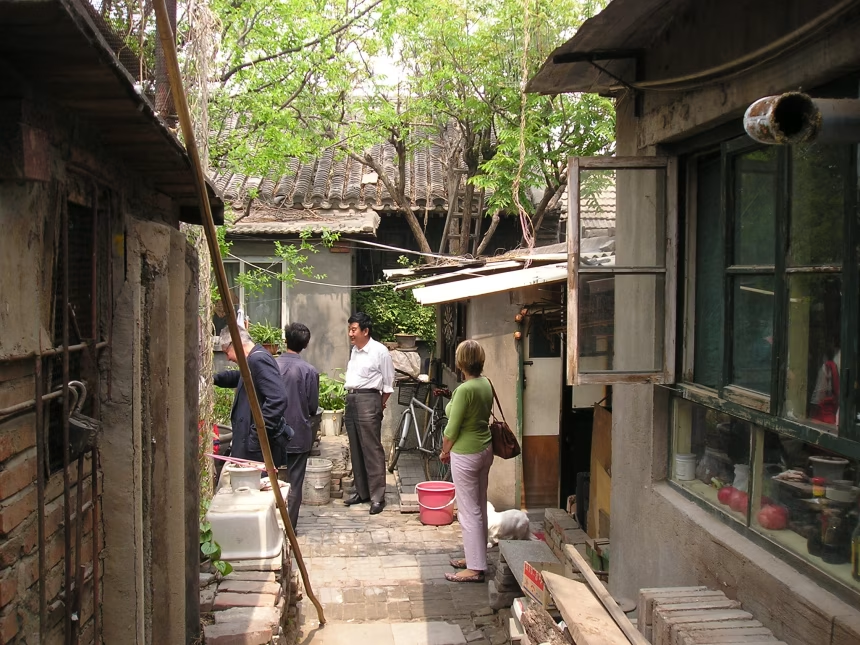
Hutong renewal is often framed as a choice between demolition and freezing everything in place. Micro-renewal offers a third approach: targeted work on toilets, kitchens, drainage, insulation, shared yards or a small public room, developed with residents rather than imposed as a complete visual makeover.
Small scale does not mean small consequence. A safely rebuilt stair or accessible washroom can determine whether an older resident remains at home. Moving air-conditioning equipment, organising waste and repairing a leaking roof may improve both comfort and the appearance of a lane without changing its plot structure.
The method requires unusually careful design because ownership, tenancy and family use overlap. An elegant shared courtyard fails if it removes storage or creates conflict over maintenance. Consultation must include tenants and vulnerable residents, not only property owners or future commercial operators.
Micro-renewal has limits. It cannot make a dangerously unstable structure safe through furniture and paint, nor solve severe overcrowding without additional housing. Some utilities require district-level coordination. The point is to use the least disruptive intervention that actually solves the diagnosed problem.
The greatest risk is that public investment becomes a prelude to displacement. Improvements raise value; without tenure protection, the residents whose daily knowledge shaped the project may be priced out. Successful renewal therefore joins design with housing policy and long-term maintenance. Its achievement is not a perfect photograph but continued neighbourhood life.