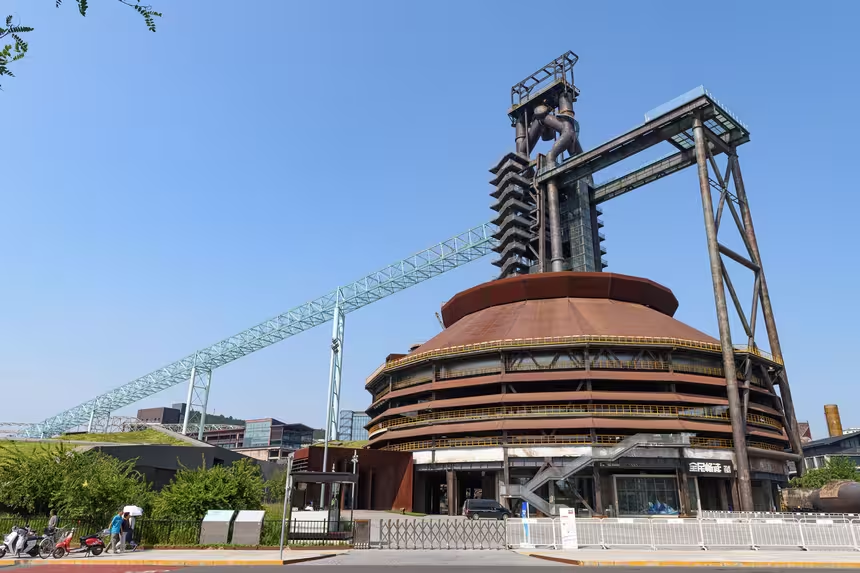
Shougang’s steelworks shaped western Beijing through furnaces, railways, jobs and pollution. Heavy production was relocated before the 2008 Olympics, leaving an industrial landscape too large to treat as one museum. Its redevelopment combines preserved furnaces and cooling towers with offices, sport, public space and new construction.
The 2022 Winter Olympics gave the site a powerful image: the Big Air ramp stood against former industrial structures. Reuse prevented total erasure, but a spectacular event is not the same as a viable district. Everyday transport, affordable workplaces and continuous public access decide whether Shougang becomes part of Beijing or an isolated backdrop.
Industrial heritage includes labour and environmental damage, not only dramatic machinery. Interpretation must explain dangerous work, neighbourhood dependence and the costs transferred through relocation and soil remediation. Cleaning contamination is an essential part of reuse even when it is invisible in photographs.
Large structures can accept functions that conventional buildings cannot, yet heating, accessibility and maintenance are expensive. Selective intervention is therefore more honest than pretending every relic can be preserved unchanged. New architecture should remain readable as new rather than imitate a factory past.
Shougang’s value lies in its scale as an urban experiment. It asks whether a single-industry territory can become mixed, connected and useful without losing the evidence of what produced it. Success will be measured not by one iconic view, but by the people who still have reasons to be there on an ordinary weekday.