Beijing is not a city whose principal monuments appeared at random. Its historic centre is organised around a 7.8 kilometre north to south axis. It begins at the Drum and Bell Towers in the north, continues through the Forbidden City and Tiananmen Square, and ends at Yongdingmen Gate in the south.
The axis developed from the thirteenth century and for centuries determined the position of imperial palaces, ceremonial buildings, gardens and public spaces. In 2024, a group of fifteen components was inscribed on the World Heritage List. Its significance lies not only in the number of monuments, but also in the exceptional clarity with which the capital expresses ideas of order and symmetry.
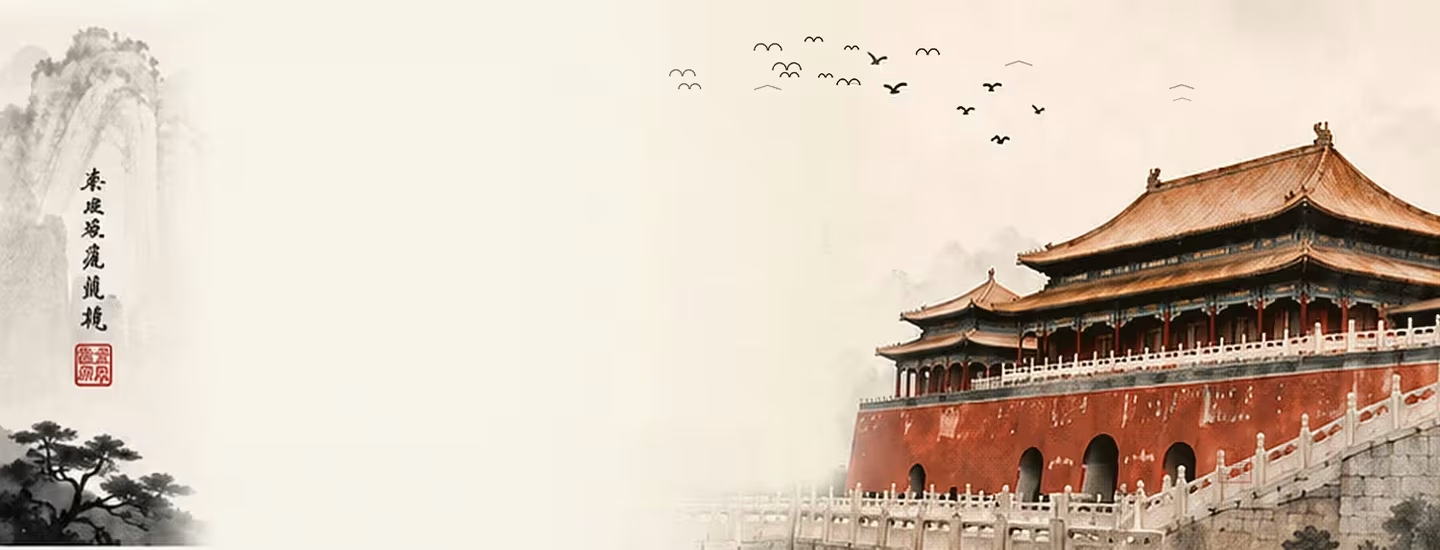
The Forbidden City stands close to the centre of the composition. To the north, the axis is completed by two historic towers that were used to measure and announce the time. South of the palace lie Tiananmen Square and, farther on, the ceremonial precincts of the Temple of Heaven and the Altar of the God of Agriculture.
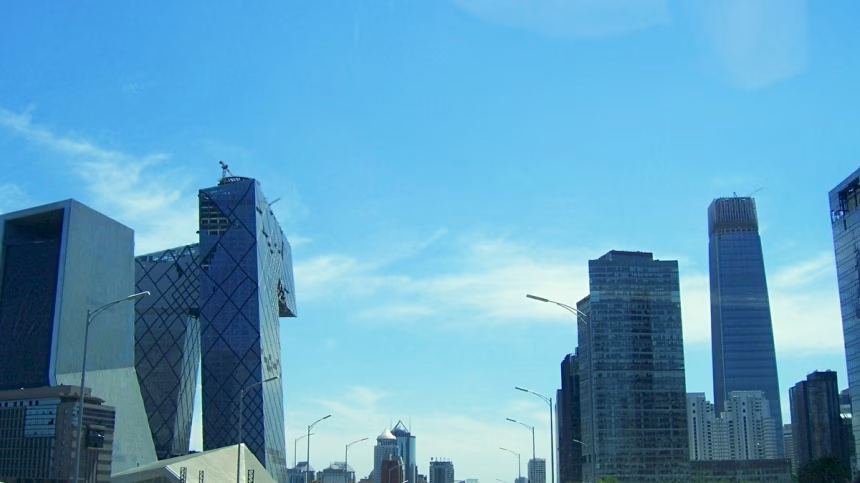
The best view of this urban logic is from the hill in Jingshan Park immediately north of the Forbidden City. From the viewing pavilion, the red palace roofs, principal gates and broader city structure can be seen forming a single line. Modern high rise buildings appear only beyond this historic layer.
The Central Axis is not a closed museum. It passes living hutongs, shopping streets, parks and everyday meeting places. Its value therefore also rests on the coexistence of ceremonial architecture with a city that continues to change while retaining its original spatial framework.
For a first visit, it makes sense to divide the route across at least two days. The northern section connects the Drum and Bell Towers, Jingshan and the Forbidden City. The southern section continues through Qianmen to the Temple of Heaven and Yongdingmen. This reveals Beijing as a carefully conceived whole rather than a collection of separate monuments.