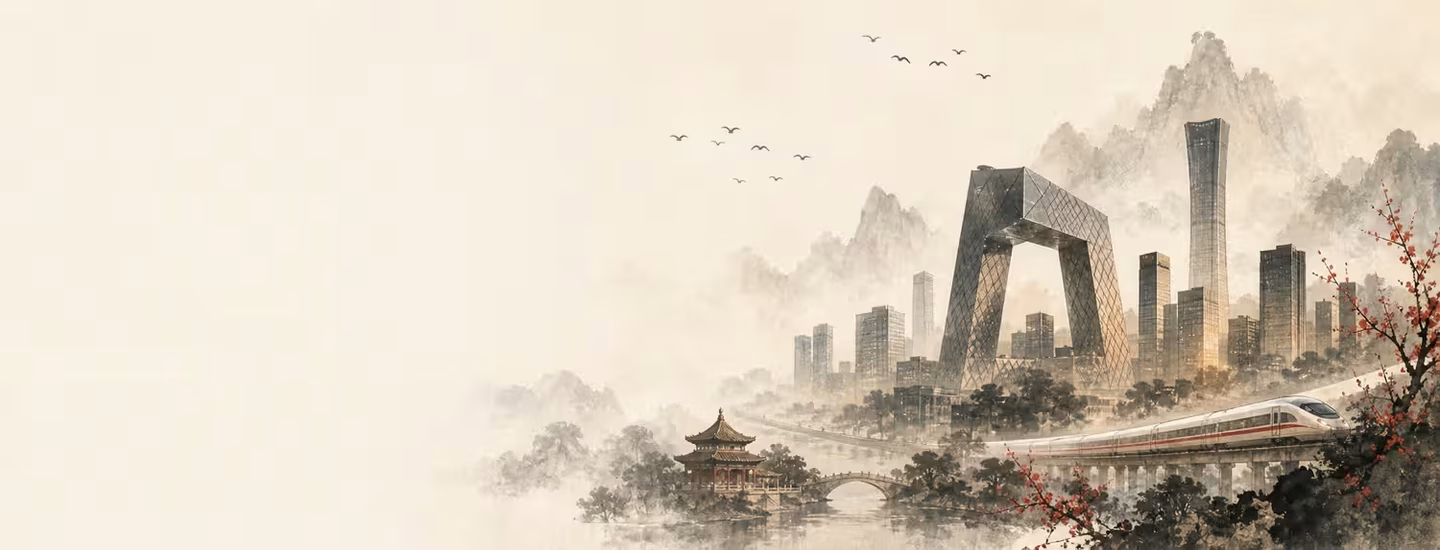
Beijing does not have one continuous row of tall buildings. The historic centre retains its low scale and straight imperial axis, while new landmarks rise mainly in business and development districts. This contrast is part of the city's present identity.
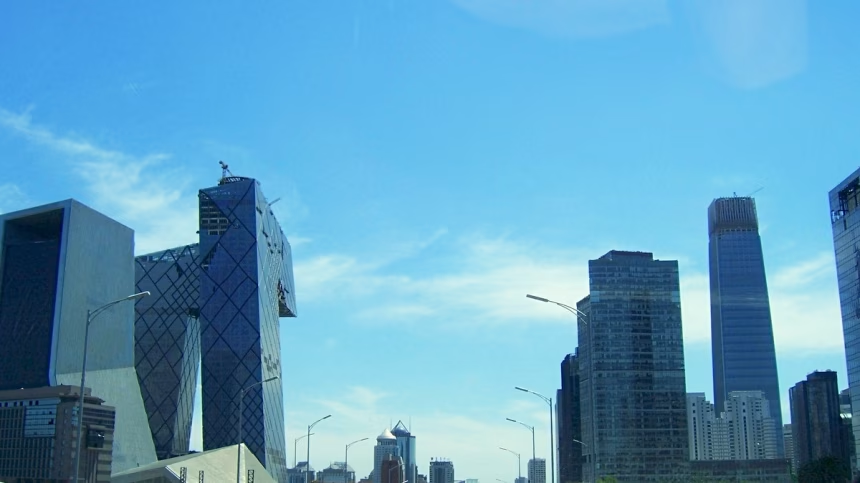
The most striking example of contemporary architecture is the CCTV Headquarters in the Central Business District. Designed by OMA, the building was developed between 2002 and 2012. Two leaning towers connect at both the top and the base to form a three dimensional loop instead of a conventional isolated tower.
The upper section includes a 75 metre cantilever. The combination of vertical and horizontal volumes changes the building's appearance with the viewing angle. From one side it appears almost flat, while from another it is clear that the two towers surround a large internal void.
The historic city uses a different architectural language. The Central Axis is composed of sequences of gates, courtyards and roofs. Its effect comes from symmetry and long sight lines rather than height. From Jingshan Park, this structure can be followed towards the Forbidden City and farther south.
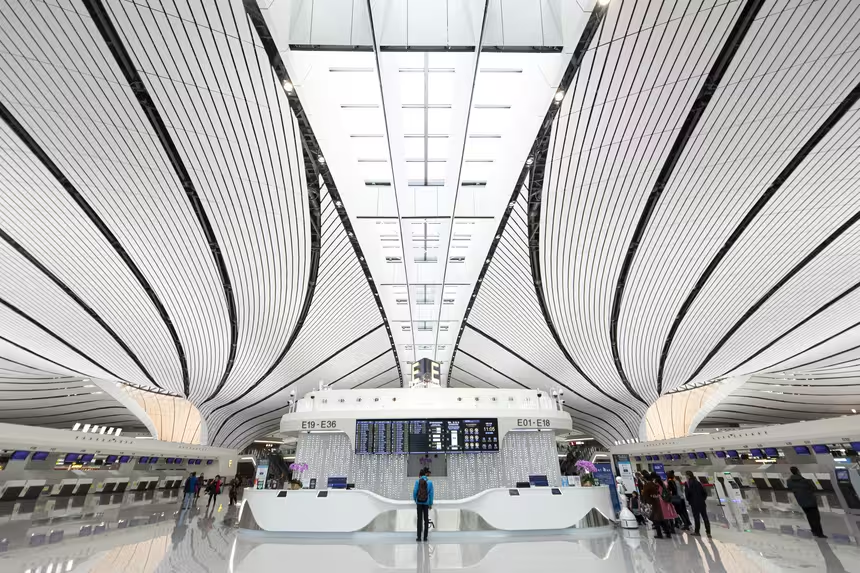
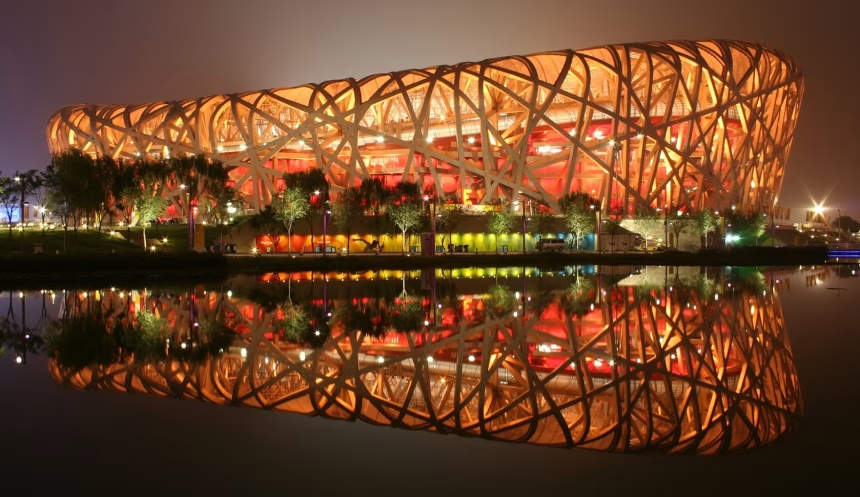
Residential districts, university campuses, Olympic buildings and large transport hubs lie between these two poles. Beijing is therefore not a simple contest between old and new. It consists of several urban scales that alternate according to function and period of construction.
Two viewpoints are useful for understanding the architecture. Jingshan explains the historic composition, while the area around Guomao and the CCTV Headquarters shows the contemporary business metropolis. Together they provide a more accurate image of the city than any single iconic view.