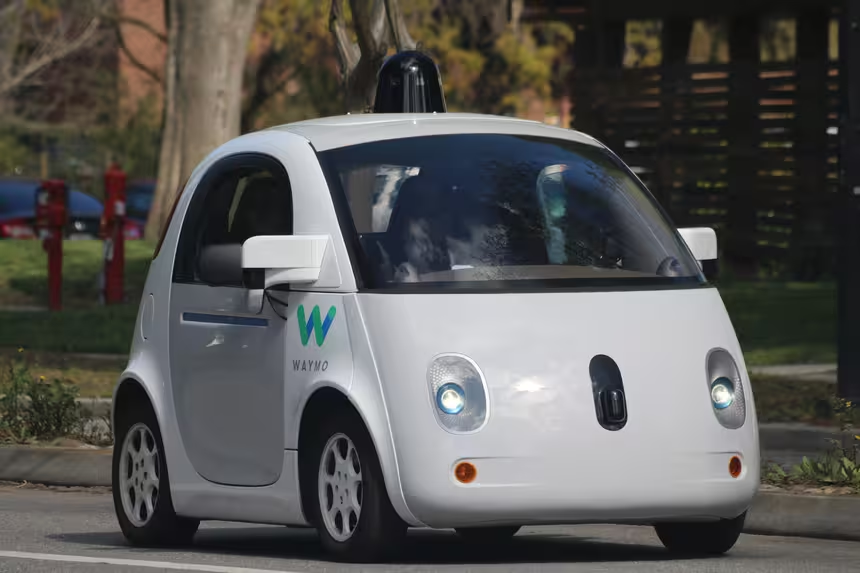
Chinese cities have tested autonomous taxis in defined zones for years. Real passengers ride, manufacturers collect data and vehicles approach mass production. The decisive change is the move toward mandatory safety standards for level-three and level-four automated driving rather than another promotional mileage total.
Level three controls the vehicle under defined conditions but expects a human to respond to a takeover request. Level four completes the driving task within its operational domain without relying on intervention. Neither label means the car can drive everywhere. Geography, roads and weather remain explicit boundaries.
Standards require lifecycle safety, simulation, track and road tests, and clear human-machine interfaces. The handover at level three is especially difficult because a disengaged driver may not understand an unusual situation within seconds. Monitoring attention does not by itself make an unrealistic takeover safe.
Robotaxis must handle rare cases, from temporary signs and emergency vehicles to falling cargo. Simulation should search for danger deliberately and validation data must remain separate from development. Sensor arguments are secondary to redundancy, diagnostics, secure updates and safe behaviour under uncertainty.
Operations extend beyond the car: remote assistance, sensor cleaning, incident response, cybersecurity and passenger evacuation all matter. Cheap driverless trips could improve access or add empty kilometres and compete with public transport. Trust will come from comparable incident reporting and transparent operational limits, not a carefully edited video.