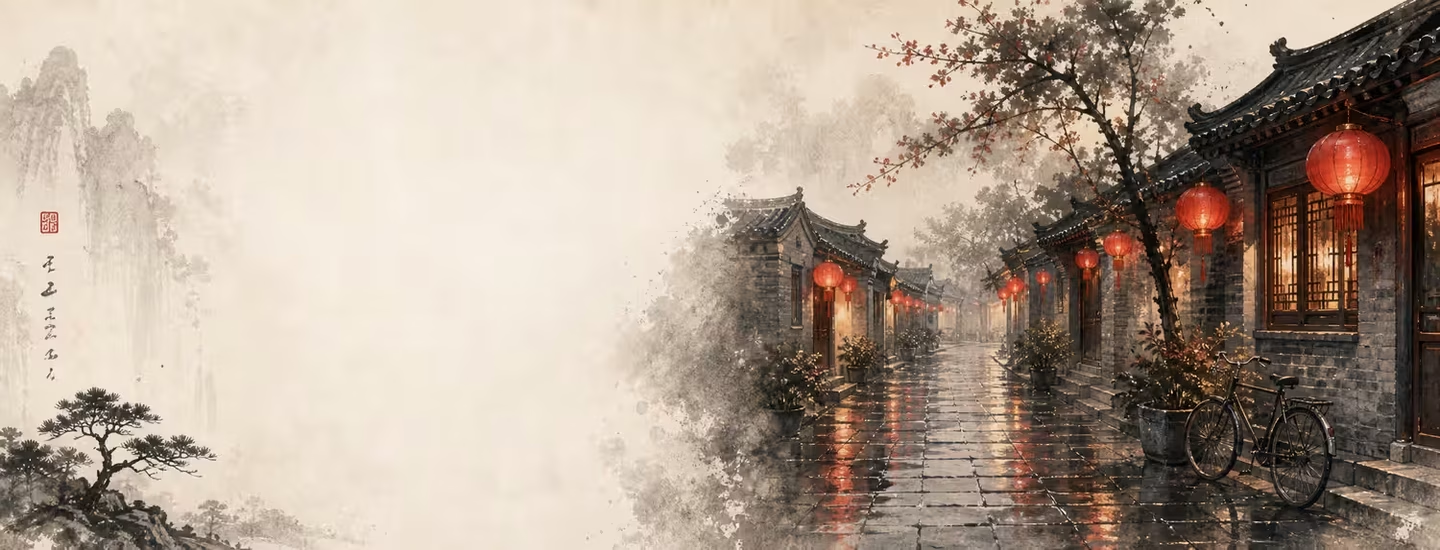
A hutong is a narrow lane in historic Beijing, not a single type of house. These lanes form networks around traditional courtyard residences known as siheyuan. The relationship between passage, gate and shared courtyard shaped everyday life in the old city.
Many hutongs developed in relation to the Central Axis and the regular city grid. Street width, the orientation of a house and the position of its main gate expressed both social and practical order. Behind an understated grey wall there is often a courtyard with several wings, rather than one room facing the street.
The historic districts are not a uniform open air museum. Some houses are still occupied by long established families, while others have been carefully restored or converted into small cultural venues. Recent municipal projects add kitchens, bathrooms, pipes and small gardens to improve living conditions without removing the original street structure.
Clearly legible hutongs can be found around the Drum and Bell Towers, Shichahai, Shijia Hutong and Dashilar. Each area has a different character. Some lanes remain quiet and residential, while others attract large numbers of visitors, shops and restaurants.
Visitors should remember that most gates lead to private homes. Public lanes, community museums and courtyards that are officially open provide the best way to explore. Photographing residents or entering a closed gate without permission intrudes on privacy.
Hutongs show Beijing at a human scale. Beside monumental palaces and wide avenues, they offer short distances, encounters between neighbours and details of daily activity. Their value lies not only in the age of the buildings, but also in the continuing relationship between architecture and life within it.