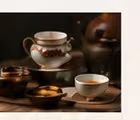
Jasmine tea has a special place in Beijing. Local people traditionally call it xiang pian and associate it with a pronounced floral aroma and full flavour. Historically, it softened the harder taste of the city's well water and gradually became part of everyday dining.
Finished tea leaves are repeatedly mixed with fresh jasmine flowers during production. The leaves gradually absorb their scent, after which the mixture is dried and the process may be repeated several times. The most elaborate varieties undergo many rounds of scenting at night, when the flowers release the most aroma.
Two well known Beijing tea brands represent different parts of the city. Zhangyiyuan was founded in 1900 and its historic branch stands in Dashilar. Wuyutai dates from 1887 and is associated with the northern part of old Beijing. Their jasmine tea techniques form part of the intangible cultural heritage.
The contemporary tea scene is not limited to traditional shops. Cold versions, tea desserts and seasonal drinks now accompany the classic infusion. Some businesses combine a teahouse with a bookshop, gallery or park and bring tea closer to a younger urban audience.
Jasmine tea is commonly prepared with water at approximately 85 to 95 degrees Celsius. Three to five grams of leaves are infused briefly, usually for tens of seconds, and the same leaves can be used several times. Water that is too hot or an excessively long infusion can easily mask the delicate floral layers with bitterness.
A Beijing teahouse can therefore be a historic venue with a performance, a quiet place for conversation or a modern bar. A moment of slowing down is the common foundation. Jasmine tea shows how an old urban taste adapts to new forms without losing its recognisable fragrance.