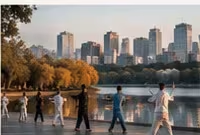
Beijing's parks are more than additions to the principal monuments. They serve exercise, dancing and social gatherings in the morning, provide shade during the day and offer city views in the evening. Each has a different character, so location and type of experience are more useful than a single ranking.
Beihai Park is one of the oldest surviving imperial gardens. It covers approximately 68 hectares, more than half of which is water. The White Pagoda, island, bridges and northern bank provide several circuits of different lengths.
Jingshan Park offers the best overview of the Central Axis. The hill immediately north of the Forbidden City was formed from material excavated for the moat. In clear weather, the upper pavilion reveals the palace composition and the modern skyline.
The Temple of Heaven combines ceremonial architecture with extensive gardens and old pine trees. Early in the morning, ordinary park life can be observed before most visitors arrive at the Hall of Prayer for Good Harvests.
Shichahai and Xihai form a more open waterscape within the historic districts. Xihai Wetland Park has a circuit approximately 1,450 metres long. The area suits a waterside walk combined with the hutongs and the Drum and Bell Towers.
The Olympic Forest Park offers a more modern and extensive landscape in the north of the city. It is suitable for a longer walk or run and contrasts with the compact imperial gardens in the centre.
Opening hours, admission and reservation rules vary between parks and may change by season. Morning is the best time for a calmer visit, when the parks are also most visibly part of local residents' everyday lives.